Category: Uncategorized

  • How Traceability Data Moves Through the Supply Chain

    How Traceability Data Moves Through the Supply Chain

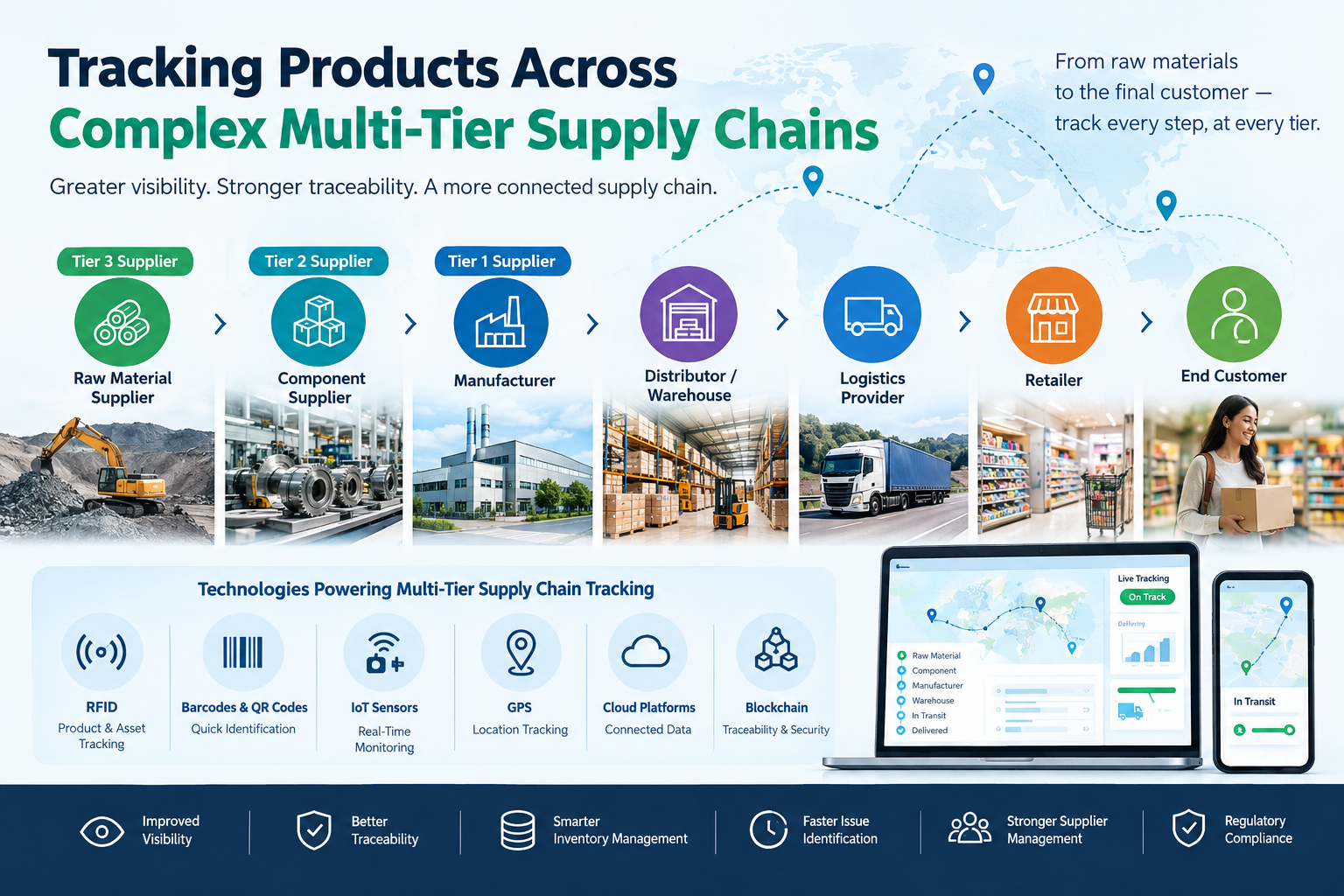
    A product does not simply move from a supplier to a customer. Before it reaches the customer’s hands, it may pass through manufacturers, warehouses, transportation providers, distributors, and retailers. At every stage, important information is created about the product and its movement.

    This is where supply chain traceability becomes important. Traceability allows businesses to understand where a product came from, what happened to it during production, where it has been stored, and how it reached its final destination.

    When this information is properly collected and connected, businesses can get better visibility into their supply chain, identify problems faster, improve product quality, and make more informed decisions.

    What Is Supply Chain Traceability?

    Supply chain traceability is the process of tracking a product, material, or component throughout its journey in the supply chain. It provides a record of important events, from the initial sourcing of raw materials to the delivery of the finished product.

    For example, a manufacturer may want to know where a particular batch of raw materials came from, when it entered production, which products were made from it, where those products were stored, and where they were eventually delivered.

    All of this information forms part of the product’s traceability record.

    What Is Traceability Data?

    Traceability data is the information collected as a product moves through different stages of the supply chain. It can include supplier details, product IDs, batch numbers, manufacturing dates, warehouse locations, shipment information, delivery records, and quality information.

    In some industries, businesses may also collect temperature, humidity, location, or other environmental data using sensors and IoT devices.

    The type of data collected depends on the product, industry, and requirements of the business.

    How Does Traceability Data Move Through the Supply Chain?

    Traceability data generally moves along with the physical movement of products.

    A simple supply chain can be represented as:

    Supplier → Manufacturer → Warehouse → Transportation → Distributor → Retailer → Customer

    At each stage, new information is created and added to the product’s digital record. When all these records are connected, businesses can follow the complete journey of a product.

    Data Begins With the Supplier

    The traceability journey usually starts with the supplier. When raw materials or components are purchased, the business can record information about their source.

    For example, a company may record the supplier’s name, material type, batch number, quantity, origin, and relevant certifications.

    This information becomes the starting point for tracking the material as it moves through the rest of the supply chain.

    Data Moves Into Manufacturing

    Once the raw materials arrive at a manufacturing facility, more information is added to the traceability record.

    The manufacturer can connect the raw-material batch with a particular production order or finished-product batch. Details such as production date, manufacturing process, quality inspection, and production location can also be recorded.

    This connection is especially useful when a company needs to find the source of a product problem. If a particular batch of finished products has a quality issue, the business can trace it back to the materials and production processes involved.

    Data Is Updated in the Warehouse

    After manufacturing, products are often moved to a warehouse or distribution center. The product’s location and movement can be recorded as it enters, moves through, and leaves the facility.

    For example, the system can record when a product was received, where it was stored, when it was picked for an order, and when it was dispatched.

    Technologies such as RFID, barcodes, QR codes, and warehouse management systems can make this process faster and reduce the need for manual data entry.

    Data Continues During Transportation

    The next stage is transportation. When products leave a warehouse, shipment information can be connected to their existing traceability records.

    Businesses can track information such as shipment numbers, vehicle details, departure times, destinations, delivery status, and transportation routes.

    For products that require controlled conditions, IoT sensors can provide additional information. For example, temperature-sensitive products may need to remain within a specific temperature range during transportation.

    This type of data can help businesses identify whether a product was exposed to unsuitable conditions during its journey.

    Data Reaches Distributors

    When products arrive at a distributor, the receiving information can be added to the traceability system.

    The distributor may record when the products were received, how many units arrived, where they were stored, and when they were sent to another location.

    This means the product’s history continues to grow as it moves between different supply-chain partners.

    Data Reaches Retailers

    Retailers are another important part of the traceability process. When products arrive at a store, warehouse, or fulfillment center, information about receiving and inventory can be recorded.

    Retailers can use this information to understand how much stock they have, where products are located, and when products were received or sold.

    For some products, retailers can also use QR codes to provide customers with additional information about the product.

    Data Reaches the Customer

    The final stage of the journey is the customer.

    Depending on the industry and the technology being used, customers may be able to access certain traceability information by scanning a QR code or using another digital method.

    They may be able to learn about the product’s origin, manufacturing details, certifications, authenticity, or other relevant information.

    This can increase transparency and help build trust between businesses and customers.

    Technologies That Help Move Traceability Data

    Modern supply chains use several technologies to collect and share traceability information. These technologies make it easier to connect physical products with digital records.

    RFID

    RFID, or Radio Frequency Identification, uses tags and readers to identify and track products and assets.

    It is particularly useful in warehouses and manufacturing environments because businesses can capture information about tagged items without manually scanning every individual product.

    Barcodes and QR Codes

    Barcodes are commonly used to identify products, packages, and shipments. When scanned, they can connect a physical item with information stored in a business system.

    QR codes work in a similar way but can also provide customers with access to additional digital information.

    IoT and Sensors

    IoT devices allow businesses to collect information from products, vehicles, equipment, and storage environments.

    For example, sensors can monitor temperature, humidity, location, movement, and other conditions. This is particularly useful for industries such as food, pharmaceuticals, healthcare, and cold-chain logistics.

    Cloud-Based Traceability Platforms

    Cloud-based platforms can bring information from different parts of the supply chain into a connected system.

    A business may have separate systems for manufacturing, inventory, warehousing, transportation, and sales. A traceability platform can help connect information from these systems and provide a broader view of the product journey.

    Blockchain

    Blockchain can be used to maintain a shared record of transactions and events between supply-chain participants.

    It can improve transparency and make historical records more difficult to change. However, blockchain is not necessary for every supply chain. Businesses should choose technologies based on their specific requirements.

    Why Is Supply Chain Traceability Important?

    The main value of traceability is visibility. Businesses can see what is happening to products and materials as they move through the supply chain.

    Faster Product Recalls

    Imagine a manufacturer discovers a problem with one particular batch of products. Without proper traceability, finding the affected products can take considerable time.

    With a good traceability system, the company can identify the relevant batch and determine where those products were shipped. This can make recalls faster and more targeted.

    Better Supply Chain Visibility

    Traceability gives businesses a clearer picture of product movement. Instead of relying on disconnected records, they can follow products across different stages of the supply chain.

    This can help identify delays, inventory problems, and other operational issues.

    Improved Quality Control

    When businesses can connect products with their suppliers, production processes, and batches, it becomes easier to investigate quality problems.

    Instead of looking at the entire supply chain, companies can focus on the specific stage or batch where an issue may have started.

    Better Regulatory Compliance

    Many industries have strict requirements for maintaining product and supply-chain records.

    A digital traceability system can make it easier to maintain, organize, and retrieve the information needed for compliance and audits.

    Reduced Counterfeiting

    Traceability can also support product authentication. By connecting products with unique identification numbers and digital records, businesses can make it more difficult for counterfeit products to enter legitimate supply chains.

    Challenges of Managing Traceability Data

    Although traceability provides many benefits, managing data across a complex supply chain can be challenging.

    Data Silos

    Different companies and departments may use different software systems. If these systems cannot communicate with each other, important information can remain isolated.

    This can create gaps in the product’s traceability record.

    Lack of Standardization

    Supply-chain partners may use different product codes, data formats, and identification methods.

    Without common standards, exchanging information between organizations can become difficult.

    Poor Data Quality

    Traceability is only useful when the data is accurate. Incorrect product numbers, missing information, duplicate records, or delayed updates can reduce the reliability of the system.

    Integration With Existing Systems

    Businesses often already have ERP, warehouse, manufacturing, and logistics systems in place.

    Connecting these systems to a modern traceability platform can require proper planning, integration, and technical expertise.

    Data Security

    Supply-chain information can contain sensitive business information. Companies therefore need appropriate security measures to control who can access and modify traceability data.

    How Businesses Can Improve Supply Chain Traceability

    Businesses do not necessarily need to completely replace their existing systems to improve traceability. They can start by identifying the most important products, processes, and data points that need to be tracked.

    Automate Data Collection

    Using RFID, barcode scanners, QR codes, and IoT devices can reduce manual data entry and improve the speed of data collection.

    Connect Different Systems

    Connecting manufacturing, inventory, warehouse, transportation, and traceability systems can help eliminate information gaps.

    Standardize Product Data

    Using consistent product IDs, batch numbers, shipment numbers, and data formats makes it easier for different systems and supply-chain partners to share information.

    Use Real-Time Monitoring

    Real-time monitoring can help businesses identify problems such as shipment delays, unexpected temperature changes, or inventory discrepancies before they become larger issues.

    Build End-to-End Visibility

    The ultimate goal of supply chain traceability should be to connect information from the original supplier all the way to the final customer.

    The more connected the data is, the easier it becomes for businesses to understand the complete product journey.

    The Future of Supply Chain Traceability

    Supply chain traceability is becoming more intelligent as businesses adopt technologies such as artificial intelligence, IoT, automation, and advanced analytics.

    AI can analyze large amounts of supply-chain data and help businesses identify unusual patterns, predict potential disruptions, and make better decisions.

    IoT devices can provide real-time information about products and shipments, while digital product passports can provide detailed information about products throughout their lifecycle.

    As businesses focus more on transparency, sustainability, compliance, and supply-chain resilience, the importance of connected traceability data will continue to grow.

    Conclusion

    Traceability data follows the journey of a product through the supply chain. It begins with information from suppliers, continues through manufacturing and warehousing, moves through transportation and distribution, and eventually reaches retailers and customers.

    When this information is collected accurately and connected across different stages, businesses gain better visibility into their operations.

    Technologies such as RFID, barcodes, QR codes, IoT sensors, cloud platforms, and data integration systems can make this process more efficient and reliable.

    Ultimately, supply chain traceability is not only about knowing where a product is. It is about understanding the complete journey of that product and having the right information available when businesses need it.

    Frequently Asked Questions

    Q1. What is supply chain traceability?

    Supply chain traceability is the ability to follow a product or material from its origin through manufacturing, storage, transportation, distribution, and delivery.

    Q2. How does traceability data move through the supply chain?

    Traceability data is collected whenever a product moves through a supply-chain stage. The information is then connected through digital systems to create a record of the product’s journey.

    Q3. What technologies are used for supply chain traceability?

    Common technologies include RFID, barcodes, QR codes, IoT sensors, cloud platforms, ERP systems, warehouse management systems, and blockchain.

    Q4. What is the difference between tracking and traceability?

    Tracking mainly focuses on the location and movement of an item, while traceability provides a broader view of the item’s history, including its origin, processing, movement, and related events.

    Q5. Why is supply chain traceability important?

    Supply chain traceability helps businesses improve visibility, quality control, inventory management, product recalls, compliance, and supply-chain risk management.

  • How Real-Time Tracking Changes Supply Chain Decision-Making

    How Real-Time Tracking Changes Supply Chain Decision-Making

    How Real-Time Tracking Changes Supply Chain Decision-Making

    Supply chains are becoming more complex, connected, and time-sensitive. Businesses need accurate information about inventory, shipments, vehicles, orders, and assets to make better operational decisions. Traditional tracking methods often provide information after an event has already happened, making it difficult for businesses to respond quickly.

    Real-time supply chain tracking changes this approach by providing continuously updated information about supply chain activities. With technologies such as IoT, GPS, RFID, cloud platforms, and AI-powered analytics, organizations can monitor operations and identify potential problems before they become major disruptions.

    This article explains how real-time tracking changes supply chain decision-making, its key benefits, technologies, use cases, challenges, and future potential.

    What Is Real-Time Supply Chain Tracking?

    Real-time supply chain tracking is the process of monitoring goods, inventory, vehicles, shipments, and other supply chain assets using technologies that provide current or near-current operational information.

    Instead of waiting for manual updates or periodic status reports, businesses can access information through centralized dashboards and tracking systems.

    For example, a logistics company can monitor the location of a delivery vehicle, while a manufacturer can track the movement of raw materials from suppliers to production facilities.

    Real-time tracking can provide information such as:

    • Current shipment location
    • Inventory levels
    • Vehicle status
    • Delivery progress
    • Temperature and environmental conditions
    • Estimated arrival times
    • Asset movement
    • Potential delays and exceptions

    This information helps supply chain teams make decisions based on what is happening now rather than relying only on historical information.

    Why Real-Time Tracking Matters for Supply Chain Decision-Making

    Supply chain decisions often need to be made quickly. A delayed shipment, inventory shortage, transportation disruption, or unexpected demand change can affect multiple stages of an operation.

    Real-time tracking gives decision-makers greater visibility and allows them to respond faster.

    Faster Access to Supply Chain Data

    Real-time systems continuously collect and update operational information. Managers can access current data through dashboards instead of waiting for manual reports.

    This makes it easier to identify changes and take action quickly.

    Better Visibility Across Operations

    Supply chains involve multiple suppliers, warehouses, transportation providers, distribution centers, and customers.

    Real-time tracking connects information from different stages and provides a more complete view of supply chain activities.

    Faster Response to Disruptions

    Traffic, weather, equipment failures, supplier delays, and other unexpected events can affect deliveries.

    Real-time tracking can help businesses identify these issues earlier and take corrective action, such as changing routes, reallocating inventory, or notifying customers.

    How Real-Time Tracking Changes Supply Chain Decisions

    The biggest advantage of real-time tracking is that it changes supply chain management from a largely reactive process into a more proactive one.

    Improving Inventory Management

    Inventory decisions depend heavily on accurate information.

    Real-time tracking can help businesses understand where inventory is located, how much is available, and how quickly it is moving through the supply chain.

    This can help reduce situations such as:

    • Overstocking
    • Stockouts
    • Lost inventory
    • Unnecessary warehouse transfers
    • Delayed replenishment

    Businesses can use current inventory information to make faster purchasing and replenishment decisions.

    Optimizing Transportation and Routes

    Transportation represents a significant part of supply chain operations.

    GPS and connected tracking systems can provide information about vehicle locations, traffic conditions, routes, and delivery progress.

    When a disruption occurs, logistics teams can identify alternative routes or adjust delivery schedules.

    This can improve fleet utilization, reduce unnecessary delays, and support more efficient transportation planning.

    Reducing Delivery Delays

    Real-time tracking allows businesses to identify shipment delays earlier.

    For example, if a shipment is moving slower than expected, the logistics team can investigate the reason and determine whether corrective action is required.

    Customers can also receive more accurate delivery updates, improving transparency and communication.

    Managing Supply Chain Disruptions

    Supply chain disruptions can quickly affect production, inventory, and customer deliveries.

    Real-time tracking provides visibility into operational changes, helping businesses identify problems earlier.

    Organizations can then evaluate alternatives such as changing suppliers, redirecting shipments, adjusting inventory allocation, or modifying production schedules.

    Improving Customer Service

    Customers increasingly expect accurate information about their orders.

    Real-time tracking enables businesses to provide shipment status, estimated arrival times, and delivery updates.

    Greater transparency can improve customer confidence and reduce the number of support requests related to order status.

    Key Technologies Behind Real-Time Supply Chain Tracking

    Several technologies work together to create real-time supply chain visibility.

    GPS Tracking

    GPS technology helps businesses monitor the location of vehicles, shipments, and mobile assets.

    It is widely used in logistics and transportation to monitor fleet movements and delivery progress.

    IoT Sensors

    Internet of Things (IoT) sensors can collect information from physical assets and environments.

    Depending on the application, sensors can monitor:

    • Location
    • Temperature
    • Humidity
    • Movement
    • Vibration
    • Equipment conditions

    This is particularly useful for sensitive products such as pharmaceuticals, food, and other temperature-controlled goods.

    RFID Technology

    Radio Frequency Identification (RFID) uses tags and readers to identify and track objects.

    RFID can help businesses monitor inventory and assets as they move through warehouses, manufacturing facilities, and distribution centers.

    Compared with manual tracking, RFID can automate the identification and movement-recording process.

    Cloud-Based Tracking Platforms

    Cloud platforms bring tracking information together in a centralized environment.

    Supply chain teams can access dashboards, reports, alerts, and operational information from different locations.

    Cloud integration also makes it easier to connect tracking data with other business systems.

    AI and Predictive Analytics

    Artificial intelligence and predictive analytics can analyze large volumes of tracking data to identify patterns and potential risks.

    For example, historical and real-time information can help businesses identify potential delivery delays, demand changes, or operational bottlenecks.

    This allows decision-makers to move beyond simply knowing what is happening and toward understanding what may happen next.

    Benefits of Real-Time Tracking for Supply Chain Management

    Implementing real-time tracking can provide several operational benefits.

    Improved Supply Chain Visibility

    Businesses gain better visibility into inventory, shipments, transportation, and assets.

    This makes it easier to understand the current state of operations and identify problems.

    Lower Operational Costs

    Better visibility can help organizations reduce unnecessary transportation, inventory holding, manual processes, and emergency interventions.

    Better Resource Utilization

    Real-time information helps organizations allocate vehicles, inventory, warehouse space, employees, and other resources more effectively.

    Faster Decision-Making

    Instead of waiting for periodic reports, managers can make decisions using current operational information.

    Improved Compliance and Traceability

    Tracking systems can create digital records of product and asset movements.

    This can support traceability requirements and make it easier to investigate where products have been and what happened during their journey.

    Real-Time Tracking vs Traditional Supply Chain Tracking

    Feature Traditional Tracking Real-Time Tracking
    Data updates Periodic Continuous or near real-time
    Visibility Limited High
    Decision-making Often reactive More proactive
    Disruption response Slower Faster
    Shipment visibility Periodic updates Current status
    Customer communication Limited More transparent
    Data analysis Mainly historical Historical + current data

    Traditional tracking can still be useful for basic operations, but real-time tracking provides greater visibility for businesses that need faster and more data-driven decisions.

    Real-Time Tracking Use Cases Across Industries

    Real-time tracking is applicable across many industries.

    Manufacturing

    Manufacturers can track raw materials, work-in-progress inventory, finished goods, and production-related assets.

    This can help production teams identify material shortages and improve coordination between warehouses and manufacturing facilities.

    Logistics and Transportation

    Logistics companies can monitor vehicles, shipments, routes, and delivery progress.

    Real-time information helps transportation teams respond to delays and improve fleet management.

    Retail and E-commerce

    Retailers can use real-time tracking to monitor inventory and shipments.

    E-commerce businesses can also provide customers with better order visibility from dispatch to delivery.

    Healthcare and Pharmaceuticals

    Healthcare organizations can track medical equipment, pharmaceutical shipments, and temperature-sensitive products.

    Monitoring environmental conditions can be especially important when products require controlled storage and transportation conditions.

    Food and Beverage

    Food businesses can monitor shipments and storage conditions throughout the supply chain.

    Temperature and location monitoring can help businesses maintain product quality and identify potential problems during transportation.

    Challenges of Implementing Real-Time Tracking

    Despite its benefits, implementing a real-time tracking system can create several challenges.

    Implementation Costs

    Businesses may need to invest in sensors, RFID tags, GPS devices, software platforms, connectivity, and system integration.

    Organizations should evaluate the expected operational benefits before selecting a solution.

    Data Integration

    Tracking systems often need to communicate with ERP, warehouse management, transportation management, CRM, and other business platforms.

    Poor integration can create disconnected data and reduce the value of real-time visibility.

    Data Security and Privacy

    Real-time systems generate large amounts of operational data.

    Businesses need appropriate security controls to protect sensitive information and prevent unauthorized access.

    Employee Adoption and Training

    Employees need to understand how to use dashboards, alerts, reports, and tracking tools effectively.

    Proper training and change management can improve adoption.

    How Businesses Can Implement Real-Time Supply Chain Tracking

    Organizations should take a structured approach when implementing real-time tracking.

    Identify Tracking Requirements

    First, determine which assets, shipments, inventory, or processes need to be tracked.

    Businesses should identify their most important visibility gaps and operational challenges.

    Choose the Right Tracking Technology

    Different requirements may call for different technologies.

    For example, GPS can be useful for vehicle tracking, while RFID can be effective for inventory and asset identification. IoT sensors may be appropriate when businesses need environmental or condition monitoring.

    Integrate Tracking With Existing Systems

    Tracking technology should ideally connect with existing business systems.

    Integration allows organizations to combine tracking information with inventory, transportation, production, and customer data.

    Monitor and Analyze Real-Time Data

    After implementation, businesses should monitor key metrics and create alerts for important events.

    Analytics can then be used to identify recurring delays, bottlenecks, inefficient routes, and other opportunities for improvement.

    The Future of Real-Time Supply Chain Decision-Making

    The future of supply chain management will increasingly combine real-time tracking with artificial intelligence, automation, and predictive analytics.

    AI systems can analyze current and historical data to identify potential disruptions and recommend possible actions.

    Digital twins can also provide virtual representations of supply chain operations, allowing organizations to model different scenarios before making operational decisions.

    As IoT devices, cloud platforms, AI, and automation become more connected, businesses will be able to move toward more intelligent and proactive supply chain management.

    The goal is not simply to know where a product is. It is to understand what is happening across the supply chain, identify what could happen next, and make better decisions before problems escalate.

    Conclusion

    Real-time supply chain tracking is changing how businesses manage inventory, transportation, logistics, and supply chain disruptions.

    By providing current operational information, real-time tracking enables organizations to make faster and more informed decisions. Technologies such as GPS, IoT, RFID, cloud platforms, and AI-powered analytics can work together to create greater supply chain visibility.

    For businesses looking to improve efficiency, reduce delays, increase transparency, and respond quickly to disruptions, real-time tracking can become an important part of a modern supply chain strategy.

    Frequently Asked Questions

    Q1. What is real-time tracking in supply chain management?

    Real-time tracking is the process of monitoring shipments, inventory, vehicles, assets, and other supply chain activities using technologies that provide current or near-current information.

    Q2. How does real-time tracking improve supply chain visibility?

    It provides businesses with current information about the location, condition, and movement of goods and assets, helping teams understand supply chain operations more clearly.

    Q3. How does real-time tracking help businesses make better decisions?

    Real-time tracking gives decision-makers access to current operational data, allowing them to respond faster to delays, inventory shortages, transportation problems, and other disruptions.

    Q4. What technologies are used for real-time supply chain tracking?

    Common technologies include GPS, IoT sensors, RFID, cloud-based platforms, AI, predictive analytics, and connected tracking devices.

    Q5. What are the challenges of implementing real-time tracking?

    Common challenges include implementation costs, system integration, data security, connectivity, employee training, and managing large volumes of operational data.

  • When Should a Business Invest in Track and Trace Technology?

    When Should a Business Invest in Track and Trace Technology?

    When Should a Business Invest in Track and Trace Technology?

    If you run a business that makes, moves, or sells physical products, you’ve probably heard the term “track and trace” thrown around in conversations about supply chain modernization. But knowing that a technology exists is very different from knowing when it’s actually worth the investment for your business.

    Track and trace systems — which capture data about a product’s location, condition, and custody at each stage of its journey — aren’t a one-size-fits-all purchase. For some companies, they’re an overdue necessity. For others, they’re a solution looking for a problem. Here’s how to tell which camp you’re in.

    What Track and Trace Actually Does

    Before diving into timing, it helps to be clear on what these systems provide. At a basic level, track and trace technology lets a business answer three questions at any moment: Where is this product? Who has handled it? And what condition is it in? Depending on the sophistication of the system, this might rely on barcodes, RFID tags, GPS, IoT sensors, or blockchain-based ledgers, all feeding into a central platform that gives visibility across the supply chain.

    Signs Your Business Is Ready to Invest

    You’re Struggling to Answer Basic Questions About Your Products

    If a customer, auditor, or regulator asks “where did this specific unit come from and where has it been,” and your team needs days — or can’t answer at all — that’s a clear signal. Manual tracking through spreadsheets and paper logs breaks down as volume and complexity grow.

    Recalls Are a Real Risk in Your Industry

    Food and beverage, pharmaceuticals, medical devices, and automotive parts are industries where a product defect can mean a large-scale recall. Without track and trace, a recall often means pulling entire batches because you can’t isolate exactly which units are affected. With granular tracking, you can identify precisely which items need to come back — saving money and protecting your brand.

    Regulatory Requirements Are Tightening

    Many sectors are seeing traceability shift from best practice to legal requirement — serialization mandates in pharma, farm-to-table rules in food production. If your industry is heading this direction, waiting only means scrambling to comply later at a higher cost with less control over implementation.

    Counterfeiting or Diversion Is Hurting Your Bottom Line

    If you’re seeing gray-market sales, counterfeit versions of your product, or unauthorized distribution, track and trace can help. Serialized tracking makes it possible to verify authenticity and pinpoint where products are leaking out of authorized channels.

    Your Supply Chain Has Grown More Complex

    A business with one factory and one warehouse can often manage with simple systems. But once you’re coordinating multiple suppliers, contract manufacturers, and international shipping lanes, complexity multiplies the chances of something going wrong — and makes it harder to find where without proper visibility.

    Customers or Partners Are Demanding It

    Large retailers, healthcare systems, and B2B partners increasingly require traceability data as a condition of doing business. If you can’t provide it, you risk losing contracts to competitors who can.

    Signs It Might Be Premature

    Investment isn’t automatically the right move just because the technology exists. It may be too early if:

    • Your product volume and supply chain are simple enough that manual processes still work reliably
    • You’re not in a regulated or recall-prone industry, and neither customers nor partners are asking for traceability data
    • You haven’t mapped your existing supply chain processes — new technology on top of poorly understood workflows often just digitizes the confusion
    • The upfront cost (hardware, software integration, staff training) would strain cash flow more than the risk it’s meant to mitigate

    How to Approach the Decision

    1. Audit Your Current Visibility Gaps

    Where do you lose sight of products? Where do errors or delays typically originate?

    2. Quantify the Risk

    What would a recall, compliance failure, or major counterfeiting incident actually cost you — in dollars, reputation, and regulatory exposure?

    3. Start With the Highest-Risk Segment

    Many businesses begin by implementing track and trace for their most regulated or highest-value product line, then expand once the system proves its value.

    4. Choose Scalable Technology

    A system that fits your business today but can grow with added locations, partners, or regulatory requirements will save you from re-investing from scratch later.

    Conclusion

    The right time to invest in track and trace technology isn’t dictated by industry trends or vendor pitches — it’s dictated by your actual risk exposure. If you’re facing regulatory pressure, meaningful recall risk, counterfeiting problems, growing supply chain complexity, or customer demands you can’t meet, the cost of inaction is likely higher than the cost of implementation. If none of those pressures exist yet, it’s reasonable to wait, while keeping an eye on how your business and industry evolve.

    The businesses that get the most value from track and trace are rarely the ones that adopted it because it was trendy. They’re the ones that adopted it because they had a clear, specific problem it was built to solve.

  • How Digital Traceability Improves Supply Chain Visibility

    How Digital Traceability Improves Supply Chain Visibility

    How Digital Traceability Improves Supply Chain Visibility

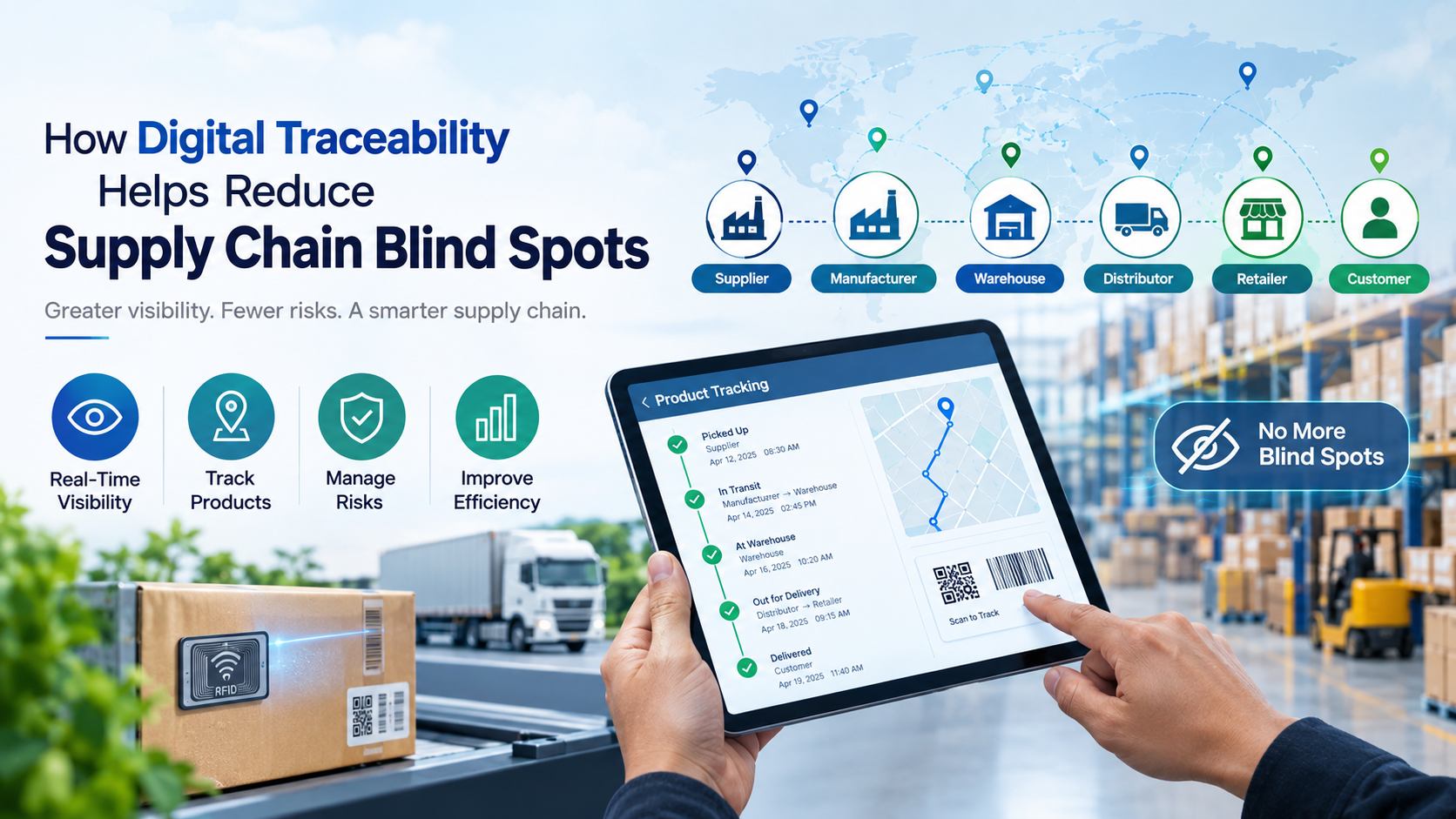
    Supply chains have become increasingly complex, involving multiple suppliers, manufacturers, warehouses, logistics providers, and customers. With products and information moving across different locations, businesses need greater transparency and control over their operations. Digital traceability in supply chain management helps organizations track products, materials, and processes throughout their journey.

    By combining technologies such as RFID, IoT, GPS, cloud computing, and data analytics, digital traceability provides real-time information about what is happening across the supply chain. This enables businesses to improve visibility, reduce delays, manage risks, and make faster decisions.

    What Is Digital Traceability in Supply Chain?

    Digital traceability is the ability to digitally track and trace products, materials, components, and related information throughout different stages of the supply chain.

    Instead of relying on manual records or disconnected systems, organizations can collect and share data digitally. This creates a more transparent view of where products are, where they came from, and what processes they have passed through.

    How Digital Traceability Works

    Digital traceability typically involves several steps:

    1. Data Collection: Product and shipment information is collected using sensors, RFID tags, barcodes, QR codes, or other technologies.
    2. Product Identification: Each product, package, or asset can be assigned a unique identifier.
    3. Real-Time Tracking: Location and status information can be monitored as products move through the supply chain.
    4. Data Integration: Information from warehouses, transportation systems, suppliers, and other sources can be connected.
    5. Monitoring and Reporting: Businesses can analyze the collected information to identify delays, risks, and operational issues.

    Key Technologies Used in Digital Traceability

    Several technologies support modern digital traceability systems, including:

    • RFID: Enables automatic identification and tracking of products and assets.
    • IoT: Uses connected sensors and devices to collect real-time information.
    • GPS: Helps monitor the location of vehicles and shipments.
    • Barcodes and QR Codes: Provide digital identification and product information.
    • Cloud Computing: Stores and provides access to supply chain data.
    • AI and Analytics: Helps identify patterns, predict disruptions, and support decision-making.
    • Blockchain: Can provide a shared and tamper-resistant record of selected supply chain transactions.

    What Is Supply Chain Visibility?

    Supply chain visibility refers to the ability of a business to monitor and understand activities across its supply chain.

    It can include visibility into procurement, manufacturing, inventory, warehousing, transportation, distribution, and delivery. Good visibility allows businesses to understand what is happening at different stages and respond quickly when problems occur.

    Why Supply Chain Visibility Matters

    Poor visibility can result in inventory shortages, excess stock, shipment delays, inaccurate information, and difficulty identifying the source of problems.

    Improved visibility helps organizations:

    • Monitor inventory levels
    • Track shipments
    • Identify bottlenecks
    • Reduce delays
    • Improve forecasting
    • Respond to disruptions
    • Improve customer service
    • Make data-driven decisions

    How Digital Traceability Improves Supply Chain Visibility

    Digital traceability provides businesses with the data required to create a more connected and transparent supply chain.

    Provides Real-Time Product Tracking

    One of the major advantages of digital traceability is real-time tracking. Businesses can monitor products and shipments as they move between suppliers, warehouses, distribution centers, and customers.

    For example, IoT sensors and GPS technology can provide information about shipment location and status. This helps logistics teams identify delays and take corrective action before they significantly affect customers.

    Improves End-to-End Supply Chain Visibility

    Digital traceability can connect information from multiple stages of the supply chain. Instead of viewing procurement, manufacturing, warehousing, and transportation as separate processes, businesses can create a more connected flow of information.

    This end-to-end visibility makes it easier to understand how an issue at one stage could affect another stage.

    Reduces Supply Chain Delays and Disruptions

    Supply chain disruptions can occur because of transportation problems, supplier delays, inventory shortages, or unexpected operational issues.

    Digital traceability helps businesses identify problems earlier. Real-time alerts and monitoring can allow teams to investigate an issue and take action before it creates larger disruptions.

    Improves Inventory Management

    Accurate inventory information is essential for efficient supply chain operations.

    Digital traceability systems can provide information about inventory quantities, locations, movement, and status. This reduces dependence on manual inventory checks and helps businesses minimize both stockouts and excess inventory.

    Enhances Product and Data Accuracy

    Manual data entry can introduce errors into supply chain records. Automated identification and data collection technologies can reduce the need for repetitive manual processes.

    Technologies such as RFID, barcode scanning, and IoT sensors can automatically capture information and improve the accuracy of supply chain records.

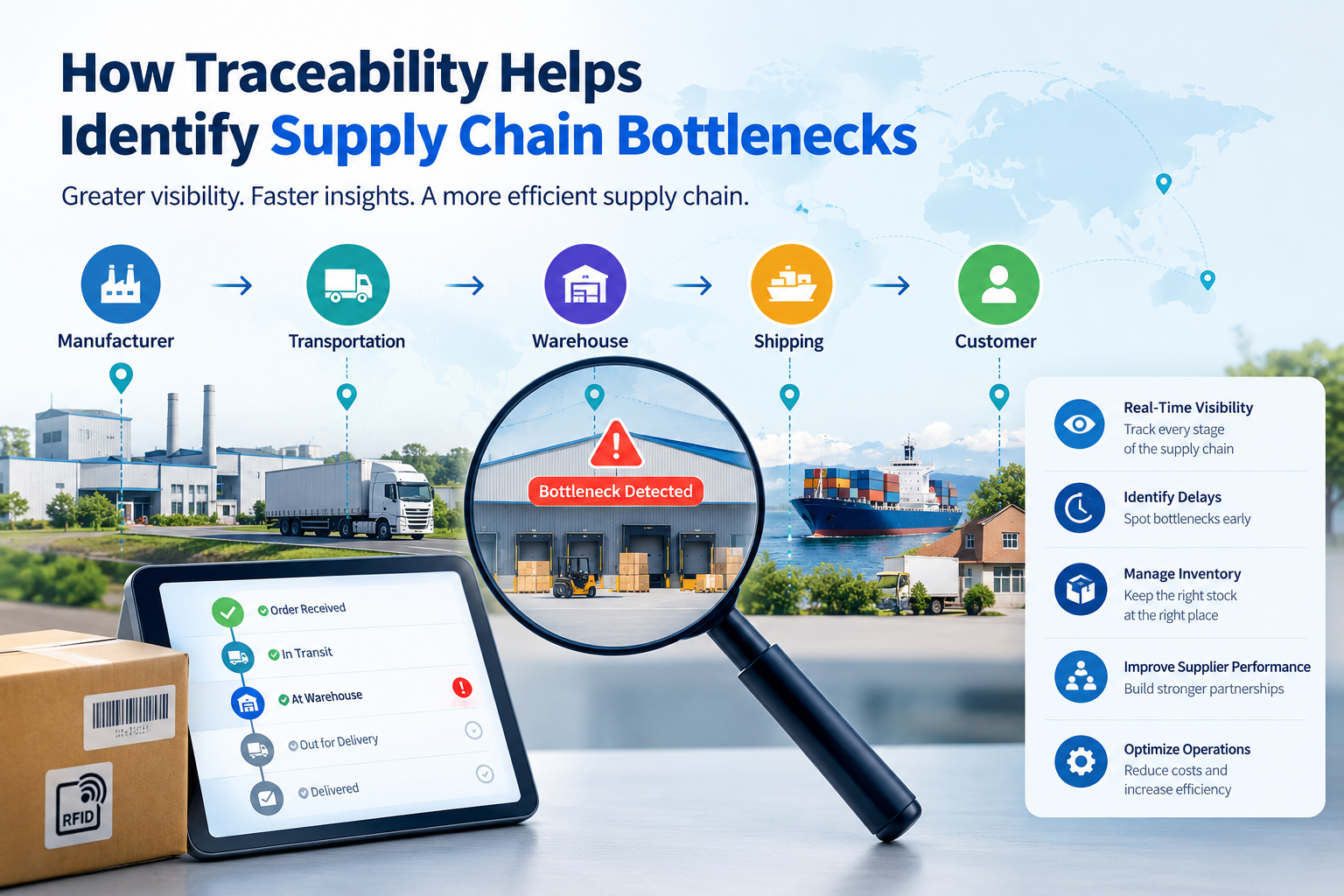
    Helps Identify Supply Chain Bottlenecks

    A lack of visibility can make it difficult to determine where delays are occurring.

    Digital traceability provides data about product movement and operational processes. Businesses can analyze this information to identify bottlenecks in manufacturing, warehousing, transportation, or distribution.

    Improves Compliance and Product Traceability

    Many industries require businesses to maintain accurate records about products, materials, suppliers, and processes.

    Digital traceability creates a structured record of product movement and related information. This can help organizations maintain documentation, support audits, and improve regulatory compliance.

    Supports Faster Decision-Making

    When accurate supply chain information is available in real time, managers can make decisions based on current data rather than outdated reports.

    For example, a business can quickly identify a delayed shipment, check available inventory, investigate a supplier issue, or redirect resources when necessary.

    Benefits of Digital Traceability for Supply Chains

    Digital traceability can provide several operational and strategic benefits.

    Increased Transparency

    Businesses gain a clearer understanding of where products and materials are located and what stage of the supply chain they have reached.

    Reduced Operational Costs

    Automation can reduce manual tracking activities and help organizations identify inefficiencies, unnecessary inventory, and avoidable delays.

    Better Risk Management

    Real-time information helps businesses detect potential problems earlier and develop faster responses to supply chain disruptions.

    Improved Customer Trust

    Customers increasingly want reliable information about product availability, delivery status, and product origin. Better traceability can support greater transparency and confidence.

    Faster Recall Management

    If a defective or contaminated product needs to be recalled, traceability data can help businesses identify affected products and determine where they were distributed.

    Improved Supply Chain Efficiency

    When information flows more effectively across different supply chain stages, organizations can coordinate operations more efficiently and improve overall performance.

    Digital Traceability Use Cases Across Industries

    Digital traceability is useful across many industries because organizations in different sectors need to monitor products, assets, materials, or shipments.

    Manufacturing

    Manufacturers can track raw materials, components, work-in-progress inventory, and finished products throughout production and distribution.

    Retail and E-commerce

    Retailers can use traceability to monitor inventory across stores, warehouses, fulfillment centers, and delivery networks.

    Food and Beverage

    Food businesses can track products from suppliers through processing, packaging, distribution, and retail. This can improve product safety and support faster recalls.

    Pharmaceuticals and Healthcare

    Pharmaceutical supply chains require accurate tracking of medicines and other products. Digital traceability can help monitor product movement and maintain records throughout distribution.

    Logistics and Transportation

    Logistics providers can use GPS, IoT, RFID, and other technologies to monitor shipments, vehicles, and assets in transit.

    Challenges of Implementing Digital Traceability

    Although digital traceability offers significant benefits, implementation can present challenges.

    High Initial Implementation Costs

    Organizations may need to invest in tracking devices, software platforms, sensors, infrastructure, and employee training.

    Data Integration Challenges

    Businesses often use multiple systems for inventory, logistics, manufacturing, and procurement. Connecting these systems can require careful planning and technical integration.

    Data Security and Privacy

    Supply chain systems may contain sensitive business information. Organizations need appropriate security controls to protect data from unauthorized access.

    Employee Training and Adoption

    Employees need to understand how to use new systems and technologies effectively. Training and change management can therefore be important parts of implementation.

    Integration With Legacy Systems

    Older systems may not easily communicate with modern traceability platforms. Businesses may need APIs, middleware, or system upgrades to create a connected environment.

    How to Implement Digital Traceability in Your Supply Chain

    Organizations should approach digital traceability as a structured transformation rather than simply installing a tracking tool.

    Identify Traceability Requirements

    First, identify what needs to be tracked, where visibility gaps exist, and which supply chain processes create the greatest risks.

    Select the Right Tracking Technology

    Choose technologies based on business requirements. RFID may be suitable for automated asset identification, while IoT sensors can be useful for monitoring environmental or operational conditions.

    Integrate Data Sources

    Connect information from suppliers, warehouses, manufacturing systems, transportation platforms, and other relevant sources.

    Implement Real-Time Monitoring

    Use dashboards, alerts, and monitoring systems to provide teams with timely information about products, assets, inventory, and shipments.

    Analyze Supply Chain Data

    Collected data can be analyzed to identify inefficiencies, recurring delays, inventory problems, and potential risks.

    Continuously Improve the System

    Digital traceability should evolve with business requirements. Organizations should regularly review system performance and identify opportunities for automation and improvement.

    Future of Digital Traceability and Supply Chain Visibility

    The future of supply chain visibility will increasingly depend on connected technologies and intelligent data analysis.

    AI can help businesses predict potential disruptions and identify patterns in supply chain data. IoT devices can provide continuous information about assets and shipments, while RFID can automate product identification and movement tracking.

    Digital twins and predictive analytics may also help organizations simulate supply chain scenarios and evaluate potential risks before they occur.

    As these technologies continue to develop, digital traceability will become an increasingly important part of building resilient, transparent, and data-driven supply chains.

    Conclusion

    Digital traceability in supply chain management gives businesses greater visibility into the movement of products, materials, assets, and information. By combining technologies such as RFID, IoT, GPS, cloud computing, and analytics, organizations can monitor supply chain activities more effectively.

    Better traceability can help businesses reduce delays, improve inventory management, identify risks, increase transparency, and make faster decisions. As supply chains become more complex, adopting digital traceability can help organizations build more efficient, responsive, and resilient operations.

    FAQs: Digital Traceability and Supply Chain Visibility

    Q1.  What is digital traceability in supply chain?

    Digital traceability in supply chain is the process of digitally tracking products, materials, assets, and information as they move through different stages, from sourcing and manufacturing to warehousing, transportation, and delivery.

    Q2.  How does digital traceability improve supply chain visibility?

    Digital traceability provides real-time information about product location, inventory, shipment status, and supply chain activities. This helps businesses identify delays, bottlenecks, and risks faster while improving decision-making.

    Q3. What technologies are used for digital traceability?

    Common technologies include RFID, IoT sensors, GPS, barcodes, QR codes, cloud computing, AI, analytics, and blockchain. Businesses can combine these technologies depending on their tracking and visibility requirements.

    Q4. What are the benefits of digital traceability?

    Key benefits include improved supply chain visibility, real-time tracking, better inventory management, reduced delays, improved transparency, faster recalls, better compliance, reduced operational costs, and improved customer satisfaction.

    Q5. What is the difference between digital traceability and supply chain visibility?

    Digital traceability focuses on tracking the history, movement, and status of products or materials. Supply chain visibility is broader and provides an overall view of activities and information across the supply chain. Digital traceability is one of the key technologies for achieving better supply chain visibility.

    Q6. Can digital traceability help reduce supply chain disruptions?

    Yes. Digital traceability can provide real-time data and alerts that help businesses detect shipment delays, inventory shortages, supplier issues, and other problems earlier, allowing them to respond more quickly.

    Q7. Which industries use digital traceability?

    Digital traceability is widely used in manufacturing, retail, logistics, transportation, food and beverage, pharmaceuticals, healthcare, and e-commerce to monitor products, assets, inventory, and shipments.

    Q8. Is digital traceability expensive to implement?

    Implementation costs depend on the size and complexity of the supply chain and the technologies being used. Businesses may need to invest in software, RFID tags, IoT devices, integration, infrastructure, and employee training.

    Q9. How does RFID support digital traceability?

    RFID enables businesses to automatically identify and track tagged products, assets, or inventory without requiring direct line-of-sight scanning. This can improve inventory accuracy and provide more efficient tracking across supply chain operations.

    Q10. What is the future of digital traceability?

    The future of digital traceability will increasingly involve AI, IoT, predictive analytics, RFID, digital twins, cloud platforms, and automated monitoring. These technologies can help organizations build more transparent, intelligent, and resilient supply chains.

  • Track and Trace vs Tracking: Understanding the Difference

    Track and Trace vs Tracking: Understanding the Difference

    Track and Trace vs Tracking: Understanding the Difference

    In today’s fast-moving supply chains, businesses need accurate visibility into products, shipments, inventory, and assets. Two commonly used terms are tracking and track and trace. Although they may sound similar, they serve different purposes and provide different levels of visibility.

    Understanding Track and Trace vs Tracking can help businesses choose the right technology for improving supply chain visibility, inventory management, compliance, and operational efficiency.

    What Is Tracking?

    Tracking is the process of monitoring the current location, status, or movement of an asset, vehicle, shipment, or product. It primarily answers the question: “Where is it now?”

    Tracking systems collect information at different points and provide businesses with real-time or near-real-time visibility.

    How Tracking Works

    Tracking generally uses technologies such as GPS, RFID, IoT sensors, barcodes, and mobile applications. The collected information is sent to a centralized system where users can monitor the current status or location of an asset.

    For example, a logistics company can use GPS tracking to monitor the location of a delivery vehicle while it is transporting goods.

    Key Features of Tracking

    Some common features of tracking include:

    • Real-time or near-real-time location monitoring
    • Shipment status updates
    • Fleet monitoring
    • Asset location management
    • Delivery notifications
    • Basic operational visibility

    Common Tracking Technologies

    Businesses commonly use:

    • GPS
    • RFID
    • Barcode systems
    • QR codes
    • IoT sensors
    • Mobile tracking applications

    What Is Track and Trace?

    Track and trace is a broader system that monitors an item throughout its journey and maintains information about its movement, history, origin, destination, and important events.

    While tracking mainly focuses on the current status or location, track and trace can answer questions such as “Where did it come from?”, “Where has it been?”, “What happened during its journey?”, and “Where is it now?”

     Track and Trace Works

    A track and trace system collects data at multiple stages of a product’s lifecycle. This can include manufacturing, packaging, warehousing, transportation, distribution, and delivery.

    Each event can be recorded and connected to the product or shipment, creating a detailed history of its journey.

    Key Features of Track and Trace

    Important features include:

    • End-to-end supply chain visibility
    • Product and shipment history
    • Origin and destination tracking
    • Event and transaction records
    • Product traceability
    • Compliance reporting
    • Recall management
    • Real-time monitoring and alerts

    Common Track and Trace Technologies

    Track and trace solutions can combine several technologies, including:

    • RFID
    • Barcodes and QR codes
    • GPS
    • IoT sensors
    • Cloud platforms
    • Artificial intelligence
    • Blockchain
    • Supply chain management software

    Track and Trace vs Tracking: Key Differences

    The main difference between tracking and track and trace is the level of visibility and historical information they provide.

    Feature Tracking Track and Trace
    Primary purpose Monitor current location or status Monitor and record the complete journey
    Main question Where is it now? Where has it been and where is it now?
    Visibility Current/real-time End-to-end and historical
    Data Location and status Location, history, events, origin, and destination
    Traceability Limited Comprehensive
    Compliance Basic Advanced
    Recall management Limited Strong
    Supply chain visibility Partial End-to-end

    Difference in Data Collection

    Tracking usually collects information related to the current location or status of an asset or shipment.

    Track and trace collects information throughout the supply chain and connects individual events to create a complete product or shipment history.

    Difference in Visibility

    Tracking provides visibility into the current position or status of an item.

    Track and trace provides a broader view by showing the item’s movement and important events throughout its lifecycle.

    Difference in Traceability

    Traditional tracking may not provide enough historical information to identify every stage through which a product has passed.

    Track and trace is specifically designed to maintain this history, making it useful for industries where product traceability is important.

    Difference in Use Cases

    Tracking is commonly used for fleet management, shipment monitoring, and asset location.

    Track and trace is often used in manufacturing, pharmaceuticals, food and beverage, logistics, retail, and other industries requiring detailed supply chain visibility.

    Difference in Compliance and Reporting

    Track and trace systems can maintain detailed records that support regulatory requirements, audits, product recalls, and supply chain reporting.

    Tracking alone may not provide the complete historical data required for these activities.

    Track and Trace vs Tracking: Which One Need Your Business?

    The right solution depends on the organization’s operational requirements.

    When Tracking Is the Better Choice

    Tracking may be suitable when the primary objective is to monitor the current location or status of assets, vehicles, or shipments.

    For example, a transportation company may only need GPS-based vehicle tracking to monitor fleet movement.

    When Track and Trace Is the Better Choice

    Track and trace is more appropriate when a business needs complete visibility into the movement and history of products or shipments.

    It is particularly valuable when businesses need traceability, compliance records, product authentication, or recall capabilities.

    When Businesses Should Use Both

    Many modern supply chains benefit from using both tracking and traceability.

    For example, IoT and GPS can provide real-time location information, while a track and trace platform can store historical events and connect information across manufacturing, warehousing, transportation, and delivery.

    Benefits of Track and Trace Solutions

    Track and trace solutions can provide several benefits to businesses.

    Improved Supply Chain Visibility

    Businesses can gain greater visibility into products, shipments, and assets as they move through different stages of the supply chain.

    Faster Problem Identification

    When an issue occurs, businesses can identify where and when the problem happened. This can help reduce delays and improve response times.

    Better Inventory Management

    Real-time information and historical records can help organizations improve inventory accuracy and reduce losses caused by misplaced or incorrectly recorded products.

    Regulatory Compliance

    Industries with strict traceability requirements can use track and trace systems to maintain digital records and support audits and compliance processes.

    Improved Customer Transparency

    Businesses can provide customers with better information about shipment status, product origin, and delivery progress.

    Technologies Used in Track and Trace Systems

    Modern track and trace solutions combine multiple technologies to collect, process, and analyze supply chain data.

    RFID

    RFID enables businesses to identify and monitor tagged products, assets, and inventory without requiring direct line-of-sight scanning.

    Barcodes and QR Codes

    Barcodes and QR codes provide a cost-effective way to identify products and record movement at different supply chain checkpoints.

    GPS and IoT

    GPS can provide location information, while IoT sensors can collect additional data such as temperature, humidity, movement, and other environmental conditions.

    Cloud-Based Platforms

    Cloud platforms allow businesses to centralize tracking and traceability information and provide access to supply chain data across different locations.

    Blockchain

    Blockchain can be used to create distributed records of supply chain transactions and events, particularly where multiple organizations need to share trusted information.

    Industries That Use Track and Trace

    Track and trace solutions are used across many industries where visibility and traceability are important.

    Manufacturing

    Manufacturers can monitor raw materials, components, work-in-progress products, and finished goods throughout production and distribution.

    Pharmaceuticals and Healthcare

    Pharmaceutical companies can use track and trace systems to monitor medicines, batches, and shipments while supporting product safety and regulatory requirements.

    Logistics and Transportation

    Logistics companies can monitor shipments, vehicles, delivery events, and transportation routes.

    Retail

    Retailers can use traceability systems to improve inventory visibility, product movement, and supply chain management.

    Food and Beverage

    Food businesses can track ingredients and finished products from suppliers through production and distribution, helping improve transparency and recall management.

    Track and Trace vs Tracking: The Future of Supply Chain Visibility

    Supply chains are becoming increasingly connected and data-driven. Technologies such as IoT, artificial intelligence, RFID, cloud computing, and automation are making it easier for businesses to monitor products and capture supply chain events.

    In the future, track and trace systems are expected to provide more predictive insights instead of simply recording past and current events. AI-powered analytics can help businesses identify potential delays, supply chain risks, inventory problems, and unusual patterns before they become major issues.

    Conclusion

    The difference between Track and Trace vs Tracking mainly comes down to the level of visibility provided.

    Tracking focuses primarily on monitoring the current location or status of an asset, shipment, or product. Track and trace goes further by recording the item’s journey, history, events, origin, and destination.

    For businesses that only need location visibility, a tracking solution may be sufficient. However, organizations that require end-to-end supply chain visibility, product history, compliance, and detailed traceability can benefit from a comprehensive track and trace solution.

    As supply chains become more connected, combining real-time tracking with end-to-end traceability can help businesses improve efficiency, transparency, and supply chain resilience.

    Frequently Asked Questions About Track and Trace vs Tracking

    Q1. What is the difference between tracking and track and trace?

    Tracking mainly monitors the current location or status of a product, shipment, vehicle, or asset. Track and trace provides broader visibility by recording an item’s movement, history, origin, destination, and important events throughout its journey.

    Q2. Is track and trace better than tracking?

    Not necessarily. The right solution depends on business requirements. Tracking is suitable when a business mainly needs current location or status information, while track and trace is more suitable for businesses that require end-to-end visibility and detailed product or shipment history.

    Q3. What technologies are used for track and trace?

    Track and trace systems commonly use RFID, barcodes, QR codes, GPS, IoT sensors, cloud platforms, artificial intelligence, blockchain, and supply chain management software.

    Q4. Why is track and trace important for supply chains?

    Track and trace improves supply chain visibility by helping businesses monitor products and shipments throughout their journey. It can also support inventory management, compliance, recall management, problem identification, and customer transparency.

    Q5. Can tracking and track and trace be used together?

    Yes. Businesses can combine real-time tracking technologies such as GPS and IoT with a track and trace platform. This provides both current location information and historical supply chain data.

    Q6. Which industries use track and trace solutions?

    Track and trace solutions are widely used in manufacturing, pharmaceuticals, healthcare, logistics, transportation, retail, food and beverage, and other industries that require detailed supply chain visibility and traceability.

    Q7. Does track and trace help with regulatory compliance?

    Yes. Track and trace systems can maintain digital records of products, shipments, and supply chain events. These records can help organizations meet applicable traceability, reporting, audit, and regulatory requirements.

    Q8. How does RFID support track and trace?

    RFID can automatically identify and capture information about tagged products or assets as they move through different checkpoints. When integrated with a track and trace platform, RFID data can contribute to real-time visibility and detailed movement histories.

    Q9. What is the main goal of a track and trace system?

    The main goal is to provide end-to-end visibility into the movement and history of products, shipments, or assets. It helps businesses understand where an item is, where it has been, and what events occurred during its journey.