How Traceability Helps Identify Supply Chain Bottlenecks
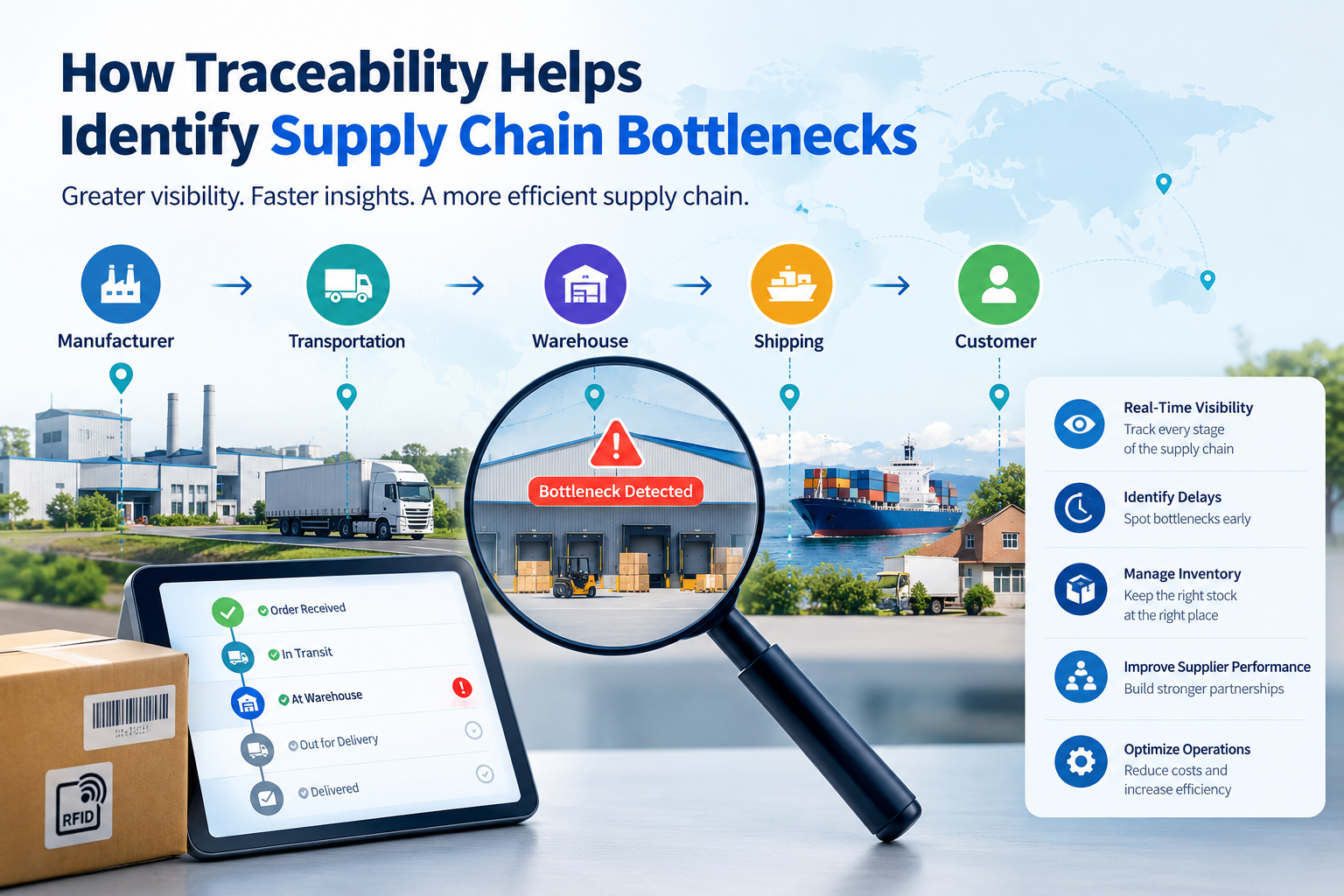
Supply chains involve many connected processes, including sourcing, manufacturing, warehousing, transportation, and delivery. When one part of the process slows down, it can affect the entire supply chain. These delays are commonly known as supply chain bottlenecks.
Businesses need clear visibility into their operations to identify where delays are happening and why they occur. This is where supply chain traceability becomes important. Traceability allows businesses to track products, materials, inventory, and processes as they move through different stages of the supply chain.
By collecting and analyzing supply chain data, companies can identify delays, locate inefficient processes, monitor supplier performance, and take corrective action before small problems become major disruptions.
What Is Supply Chain Traceability?
Supply chain traceability is the ability to track the movement and history of products, materials, and information throughout the supply chain.
It provides businesses with information about where a product came from, where it is currently located, what processes it has passed through, and where it is going next.
How Supply Chain Traceability Works
A traceability system collects data at different points in the supply chain. For example, a product can be tracked when it enters a warehouse, moves to production, leaves the facility, and reaches a distribution center.
Technologies such as RFID, barcodes, QR codes, IoT sensors, GPS, and cloud-based platforms can help collect and share this information.
Key Data Captured Through Traceability
A supply chain traceability system may capture information such as:
- Product identification
- Inventory levels
- Supplier information
- Shipment status
- Warehouse movements
- Production stages
- Delivery information
- Time and location data
- Product batches and lots
This information helps businesses understand what is happening across their supply chain.
What Are Supply Chain Bottlenecks?
A supply chain bottleneck occurs when a particular process, location, supplier, or resource cannot handle the required workload efficiently.
For example, if a warehouse takes too long to process incoming shipments, products may remain stuck at that stage. This can delay transportation, distribution, and final delivery.
Common Causes of Supply Chain Bottlenecks
Some common causes include:
- Poor inventory management
- Supplier delays
- Warehouse processing issues
- Transportation delays
- Manual data entry
- Limited production capacity
- Equipment failures
- Poor communication between supply chain partners
- Lack of real-time visibility
How Bottlenecks Affect Supply Chain Performance
Even a small bottleneck can create a chain reaction. Delays at one stage can increase inventory holding costs, affect production schedules, delay customer orders, and reduce overall operational efficiency.
Identifying bottlenecks early allows businesses to address problems before they become larger disruptions.
How Traceability Helps Identify Supply Chain Bottlenecks
Supply chain traceability provides businesses with visibility into different stages of their operations. Instead of relying only on manual records or delayed reports, companies can use real-time or near-real-time data to identify where products and materials are located.
Real-Time Visibility Across the Supply Chain
Traceability systems can provide visibility into the movement of products and materials.
For example, if a shipment remains at a particular warehouse longer than expected, the business can investigate the reason for the delay. This helps teams identify potential bottlenecks more quickly.
Identifying Delays and Process Inefficiencies
Traceability data can show how long products spend at different stages.
If products consistently take longer than expected during picking, packing, production, or transportation, businesses can investigate that specific process.
This makes it easier to determine whether the problem is related to people, equipment, inventory, transportation, or workflow.
Tracking Inventory Movement
Inventory that cannot be located quickly can create operational delays.
Traceability systems help businesses monitor inventory movement from receiving to storage, production, picking, packing, and dispatch. This can reduce the time employees spend searching for products and materials.
Finding Supplier and Logistics Issues
Supplier performance can have a significant impact on the supply chain.
By tracking purchase orders, shipments, delivery times, and product movements, businesses can identify suppliers or logistics processes that frequently cause delays.
This information can help supply chain managers investigate recurring issues and improve coordination.
Detecting Recurring Bottlenecks
Some bottlenecks happen repeatedly rather than as one-time events.
By analyzing historical traceability data, companies can identify patterns. For example, a particular warehouse location may regularly experience delays, or shipments from a specific supplier may frequently arrive late.
Identifying these patterns allows businesses to focus on the root cause instead of repeatedly fixing the same problem.
Key Benefits of Using Traceability to Reduce Bottlenecks
Supply chain traceability can provide several operational benefits when implemented correctly.
Improved Supply Chain Visibility
Businesses gain better visibility into products, materials, shipments, and processes. This makes it easier to understand where goods are and what is happening at each stage.
Faster Problem Identification
When supply chain data is available quickly, teams can identify unusual delays and investigate them sooner.
Better Inventory Management
Accurate tracking helps businesses understand inventory availability and movement. This can reduce unnecessary searching, stock discrepancies, and delays caused by missing materials.
Improved Supplier Performance
Traceability data can help companies monitor supplier delivery times, order accuracy, and shipment performance.
Reduced Operational Costs
Finding bottlenecks can help businesses reduce unnecessary delays, excessive inventory holding, manual work, and transportation inefficiencies.
Technologies That Support Supply Chain Traceability
Modern traceability systems can combine multiple technologies to create better visibility.
RFID Technology
RFID uses radio-frequency identification tags and readers to automatically identify and track products, assets, and inventory.
It can be particularly useful in warehouses, manufacturing facilities, retail operations, and logistics.
Barcode and QR Code Tracking
Barcodes and QR codes provide a simple way to identify and track products, packages, batches, and shipments.
When integrated with supply chain software, scanning data can provide information about product movement and status.
IoT and Real-Time Tracking
IoT devices and sensors can collect information about location, temperature, humidity, movement, and other conditions.
This can be useful for industries where product conditions need to be monitored throughout transportation and storage.
AI and Data Analytics
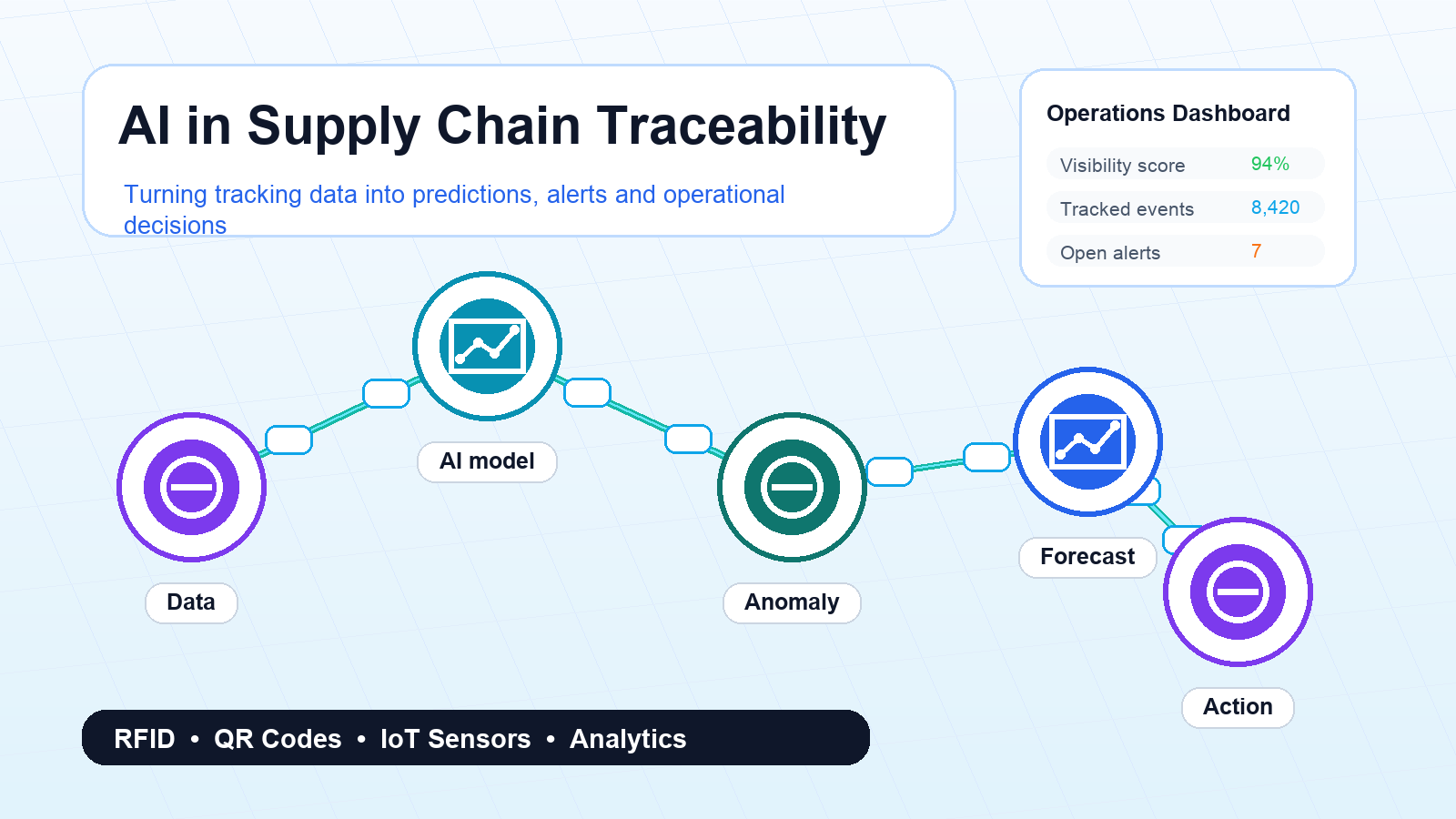
AI and analytics can help businesses analyze large volumes of supply chain data.
These technologies can identify patterns, detect unusual activity, and support predictive analysis that helps businesses respond to potential supply chain problems.
How to Implement Supply Chain Traceability
Implementing traceability requires more than simply installing tracking technology. Businesses should first understand their processes and determine where visibility is most important.
Map Your Supply Chain Processes
Start by documenting the major stages of the supply chain, from suppliers and manufacturing to warehousing, transportation, and delivery.
This helps identify where tracking information is currently available and where visibility is missing.
Identify Critical Tracking Points
Not every stage requires the same level of tracking.
Businesses should identify important points where delays, losses, quality issues, or inventory problems are most likely to occur.
Choose the Right Traceability Technology
The appropriate technology depends on the business requirements.
For example, RFID may be useful for automated inventory tracking, while barcodes may be suitable for cost-effective product identification. IoT sensors may be useful when environmental conditions need to be monitored.
Monitor and Analyze Supply Chain Data
Collecting data is only the first step. Businesses need to regularly analyze the information to identify delays, unusual patterns, and recurring bottlenecks.
Dashboards and automated alerts can help supply chain teams respond more quickly.
Real-World Example of Bottleneck Identification Through Traceability
Consider a company that operates several warehouses.
The company notices that some customer orders are consistently delivered late. Without detailed tracking data, it may be difficult to determine whether the problem is related to inventory, warehouse processing, or transportation.
With a traceability system, the company can review the movement history of affected orders.
Example: Identifying a Warehouse Processing Delay
The data may show that products are arriving at the warehouse on time but spending several hours waiting for picking and packing.
This indicates that the warehouse processing stage may be creating the bottleneck.
The company can then investigate staffing, warehouse layout, equipment, or workflow issues and take appropriate action.
Example: Detecting a Supplier Delivery Issue
A business may also discover that a specific supplier frequently delivers materials later than the agreed schedule.
By comparing supplier delivery data over time, the company can identify the recurring issue and work with the supplier to improve delivery performance.
Best Practices for Reducing Supply Chain Bottlenecks
Businesses can improve the value of traceability by following several best practices.
Maintain Accurate and Real-Time Data
Incorrect or outdated information can lead to poor decisions. Businesses should ensure that tracking data is accurate and updated as products move through the supply chain.
Connect Suppliers, Warehouses, and Logistics
Supply chain visibility becomes more useful when information can be shared across different supply chain partners.
Connecting systems can reduce information gaps and improve coordination.
Use Automated Alerts
Automated alerts can notify teams when a shipment is delayed, inventory falls below a threshold, or a process takes longer than expected.
This allows teams to investigate problems before they become major disruptions.
Continuously Monitor Performance
Supply chains change over time. Businesses should regularly review traceability data and performance indicators to identify new bottlenecks and improve processes.
Conclusion
Supply chain traceability provides businesses with greater visibility into the movement of products, materials, and information. By tracking activities across suppliers, warehouses, manufacturing facilities, transportation networks, and distribution centers, companies can better understand where delays occur.
Traceability does not simply show where a product is. When combined with analytics and appropriate tracking technologies, it can help businesses identify recurring delays, investigate process inefficiencies, monitor supplier performance, and improve supply chain operations.
For businesses looking to improve supply chain visibility, traceability can be an important part of building a more connected and data-driven supply chain.
Frequently Asked Questions About Supply Chain Traceability
Q1. How does traceability help identify supply chain bottlenecks?
Traceability provides information about product movement and process times. Businesses can use this data to identify where products are experiencing delays and investigate the causes.
Q2. What technologies are used for supply chain traceability?
Common technologies include RFID, barcodes, QR codes, IoT sensors, GPS tracking, cloud platforms, and data analytics.
Q3. Can traceability reduce supply chain delays?
Traceability can help businesses identify the sources of delays more quickly. Once the bottleneck is identified, companies can investigate and improve the affected process.
Q4. How does RFID improve supply chain visibility?
RFID can automatically identify and track tagged products and assets. This can provide businesses with more efficient inventory and movement tracking.
Q5. Why is real-time supply chain data important?
Real-time or near-real-time data helps businesses understand what is happening across their supply chain and respond more quickly when delays or other issues occur.