How Supply Chain Traceability Works Across Multiple Suppliers
Modern supply chains rarely depend on a single supplier. Manufacturers, distributors, retailers, and logistics providers often work with multiple vendors across different regions. While this improves flexibility and sourcing options, it also creates challenges in tracking products, materials, and information. This is where supply chain traceability becomes essential.
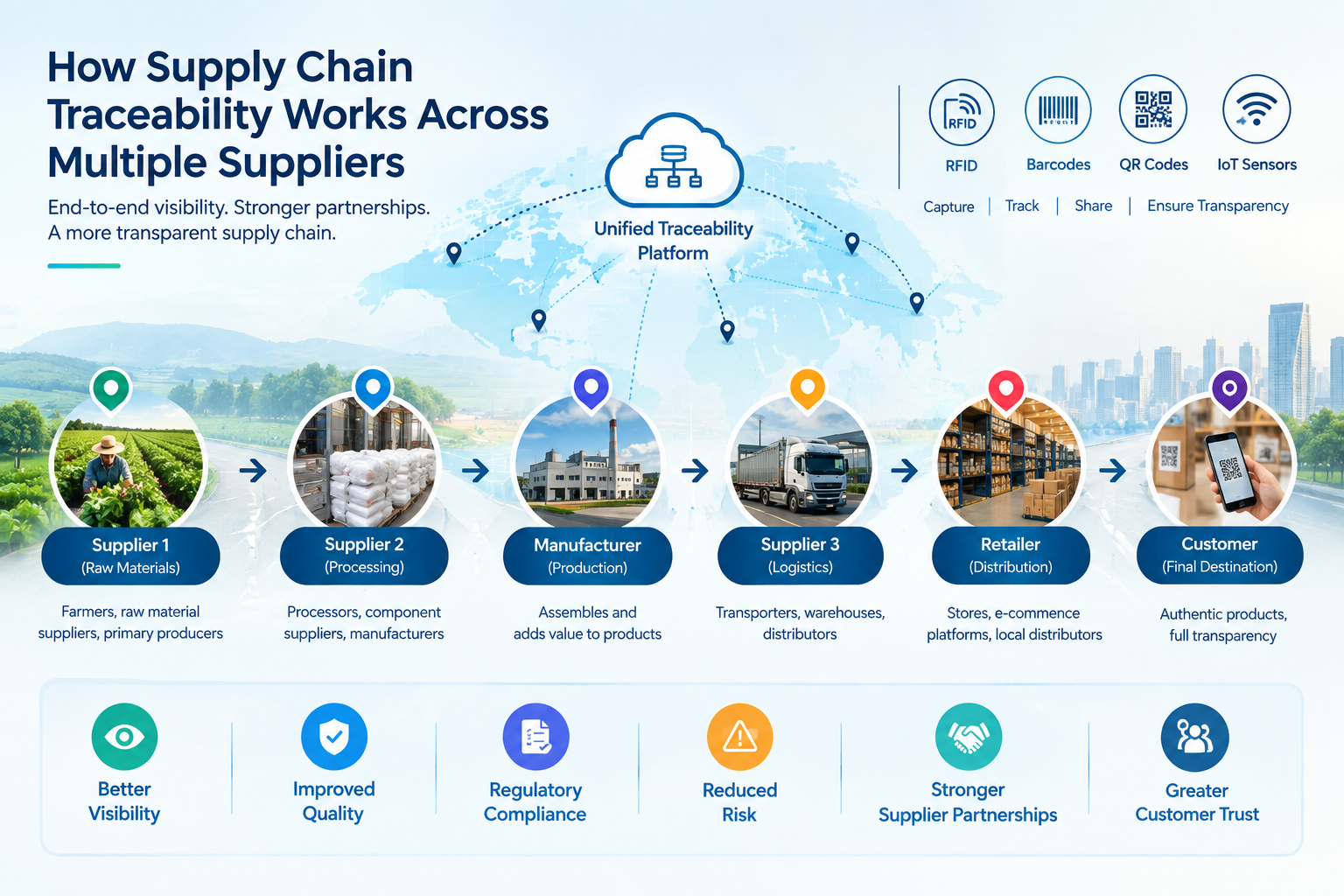
Supply chain traceability allows businesses to monitor the movement of products, raw materials, and components from the source to the final customer. It provides complete visibility across all suppliers, helping organizations improve quality, ensure compliance, reduce risks, and build customer trust.
What Is Supply Chain Traceability?
Supply chain traceability is the process of recording, tracking, and monitoring products and materials throughout every stage of the supply chain. It enables businesses to identify where products come from, how they are processed, and where they are delivered.
For companies working with multiple suppliers, traceability creates a connected view of supplier information, inventory, production, transportation, and delivery data.
How Supply Chain Traceability Works Across Multiple Suppliers
When several suppliers contribute materials or components, businesses need a structured system to collect and share information.
Supplier Identification and Data Collection
The first step is collecting data from every supplier. This includes:
- Supplier details
- Product information
- Batch or lot numbers
- Manufacturing dates
- Shipping records
- Compliance documents
A centralized traceability platform stores this information and creates a digital record for every product.
Tracking Materials From Source to Manufacturer
Raw materials often pass through multiple suppliers before reaching manufacturers. Each movement is recorded using tracking technologies such as RFID tags, barcodes, QR codes, or IoT sensors.
For example, a food manufacturer may source ingredients from different farms, processors, and packaging suppliers. Traceability systems connect data from every supplier to create an end-to-end product history.
Connecting Data Across Multiple Supply Chain Partners
A major challenge in multi-supplier environments is integrating data from different systems. Cloud-based traceability platforms help businesses combine information from suppliers, warehouses, transport providers, and production units into a single dashboard.
This improves visibility and allows organizations to track products in real time.
Using RFID, Barcodes, QR Codes, and IoT
Several technologies support supply chain traceability:
- RFID: Enables automatic product identification and tracking.
- Barcodes: Provide cost-effective item tracking.
- QR Codes: Offer detailed product information and easy scanning.
- IoT Sensors: Monitor location, temperature, humidity, and movement.
These technologies improve data accuracy and reduce manual errors.
Real-Time Supply Chain Visibility
Real-time visibility helps businesses identify delays, shortages, and quality issues quickly. Managers can monitor supplier performance, inventory levels, and shipment status through digital dashboards.
This reduces disruptions and improves operational efficiency.
Key Components of Multi-Supplier Supply Chain Traceability
An effective traceability system includes several essential elements:
Supplier Data Management
Maintaining accurate supplier records is critical for traceability.
Product and Batch Tracking
Tracking batches allows businesses to identify affected products during recalls or quality issues.
Digital Traceability Records
Digital records improve transparency and simplify audits.
Data Integration and Sharing
Connected systems enable smooth communication between suppliers and business partners.
Real-Time Monitoring and Alerts
Automated alerts help businesses respond quickly to disruptions.
Benefits of Supply Chain Traceability Across Multiple Suppliers
Businesses gain several advantages from implementing traceability systems.
Better Supply Chain Visibility
Organizations can monitor products and materials at every stage.
Faster Problem Identification
Issues can be detected and resolved quickly.
Improved Product Quality
Better monitoring leads to consistent quality standards.
Easier Regulatory Compliance
Traceability supports compliance with industry regulations.
Reduced Supply Chain Risk
Companies can identify supplier risks and minimize disruptions.
Improved Customer Trust
Customers increasingly expect transparency regarding product origin and quality.
Challenges of Tracking Multiple Suppliers
Despite its benefits, multi-supplier traceability presents challenges.
Inconsistent Supplier Data
Different suppliers may use different formats and systems.
Lack of Data Integration
Disconnected systems can limit visibility.
Limited Supply Chain Transparency
Incomplete information can affect decision-making.
Supplier Compliance Issues
Not all suppliers maintain the same standards.
Managing Large Volumes of Data
Businesses need efficient systems to handle traceability information.
Technologies Used for Multi-Supplier Traceability
Several digital technologies strengthen traceability systems:
RFID Technology
Automates product identification and tracking.
Barcode and QR Code Tracking
Supports cost-effective inventory management.
IoT Sensors
Provide real-time monitoring.
Cloud-Based Platforms
Enable centralized data management.
AI and Analytics
Help predict risks and improve decision-making.
Best Practices for Implementing Supply Chain Traceability
To improve traceability across multiple suppliers, businesses should:
- Standardize supplier data.
- Integrate supply chain systems.
- Automate data collection.
- Monitor supplier performance.
- Use real-time tracking technologies.
- Maintain accurate digital records.
Frequently Asked Questions
Q1. What is supply chain traceability?
Supply chain traceability is the ability to track products, materials, and information throughout the supply chain.
Q2. How does traceability work across multiple suppliers?
It combines supplier, inventory, production, and logistics data into a unified system.
Q3. Which technologies support traceability?
RFID, barcodes, QR codes, IoT sensors, cloud platforms, and AI are commonly used.
Conclusion
Supply chain traceability across multiple suppliers provides organizations with greater visibility, better quality control, and improved compliance. By connecting supplier data with technologies such as RFID, barcodes, IoT, and cloud platforms, businesses can build transparent and resilient supply chains. As global supply networks continue to grow, traceability will remain a key factor in improving efficiency, reducing risks, and strengthening customer trust.