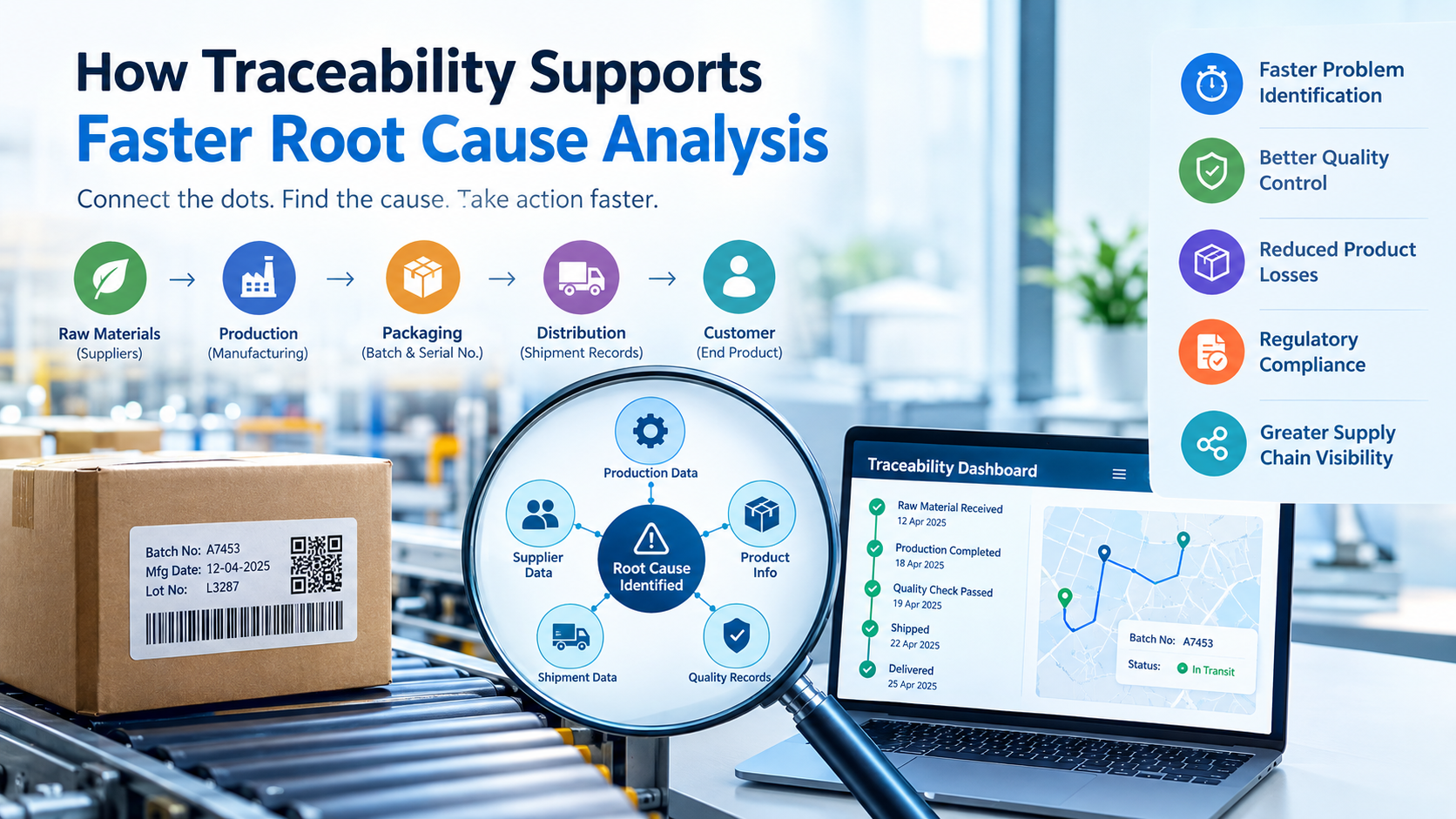
When a product issue, quality failure, or supply chain problem occurs, businesses need to find the cause quickly. Delays in identifying the source of a problem can lead to product recalls, production downtime, customer complaints, and financial losses.
This is where traceability for root cause analysis becomes important. A good traceability system allows businesses to follow products, materials, processes, and transactions throughout their journey. By connecting this information, companies can identify where a problem started and take corrective action faster.
What Is Traceability in Root Cause Analysis?
Understanding Traceability
Traceability is the ability to track the history, location, movement, and status of a product, material, or process throughout the supply chain.
For example, a manufacturer may need to know where a particular batch of raw materials came from, which production line processed it, when it was manufactured, and which customers received the finished products.
A digital traceability system stores and connects this information, making it easier to access when an issue occurs.
What Is Root Cause Analysis?
Root cause analysis is a structured process used to identify the underlying reason behind a problem rather than only treating its visible symptoms.
For example, if a batch of products fails a quality inspection, the business needs to determine whether the problem came from the raw material, production process, equipment, storage conditions, or another stage.
How Traceability Connects the Two
Traceability provides the historical data needed for root cause analysis. Instead of manually checking different records, teams can follow the product’s journey and identify where something went wrong.
This can significantly reduce the time required to investigate a problem.
Why Faster Root Cause Analysis Matters
Reducing Product and Operational Risks
A quality problem can affect multiple products or batches. Finding the source quickly helps businesses determine which products are actually affected and which are not.
This allows companies to take targeted action instead of unnecessarily stopping an entire production process.
Minimizing Downtime and Delays
When the cause of a problem is unknown, production may need to be paused while teams investigate. Faster root cause analysis can help identify the affected process and reduce unnecessary downtime.
Improving Quality and Compliance
Many industries need detailed records about products, materials, and production processes. Traceability makes these records easier to access and supports quality management and regulatory requirements.
How Traceability Supports Faster Root Cause Analysis
Tracking Products Across the Supply Chain
Traceability allows businesses to follow products from raw material sourcing through manufacturing, warehousing, distribution, and delivery.
If a problem is detected, teams can trace the affected product backward to understand its history.
Identifying the Source of a Problem
A traceability system can connect products with important information such as batch numbers, suppliers, production lines, machines, operators, and processing dates.
This helps teams narrow down the possible source of a problem much faster.
Connecting Production and Quality Data
Quality inspection results can be connected with production information. For example, if several defective products came from the same production line or batch, the data can help investigators identify a possible connection.
Creating a Complete Audit Trail
A complete audit trail provides a historical record of activities and events. It helps businesses understand what happened, when it happened, and where it happened.
This information can make investigations more structured and evidence-based.
Key Traceability Data Used for Root Cause Analysis
Product and Batch Information
Unique product IDs, batch numbers, serial numbers, and manufacturing dates can help identify specific products and groups that may be affected.
Production and Manufacturing Records
Production records can provide information about machines, production lines, processing times, temperatures, operators, and other relevant parameters.
Supplier and Material Data
Raw material information can help businesses trace a finished product back to its suppliers and original materials.
If the same issue appears across products using materials from a particular source, this information can support further investigation.
Distribution and Shipment Records
Traceability also helps identify where affected products were shipped. Businesses can use this information to locate products in warehouses, distribution centers, or customer locations.
How Digital Traceability Improves Root Cause Analysis
Real-Time Data Collection
Digital systems can collect information as products move through different stages. This provides businesses with more current information when investigating an issue.
Automated Data Tracking
Manual recordkeeping can be time-consuming and may introduce data-entry errors. Technologies such as RFID, barcodes, QR codes, and IoT devices can automate many tracking activities.
Centralized Traceability Information
A centralized system can bring product, production, quality, inventory, and shipment information together. Teams can then access relevant data without searching through multiple disconnected records.
Faster Identification of Affected Products
Once the source of a problem is identified, traceability data can help determine which products or batches may have been affected.
This is particularly useful when businesses need to manage recalls or corrective actions.
Traceability Technologies That Support Root Cause Analysis
RFID Technology
RFID uses radio-frequency identification to identify and track tagged products, assets, or materials. It can capture information without requiring direct line-of-sight scanning.
This can improve visibility across warehouses, manufacturing facilities, and supply chains.
Barcode and QR Code Tracking
Barcodes and QR codes provide a simple way to identify products, batches, packages, and shipments. When connected to a digital system, scanning can create a record of product movement.
IoT-Based Tracking
IoT devices can collect information such as location, temperature, humidity, movement, and equipment conditions.
This information can be particularly useful when environmental or operational conditions contribute to a product problem.
Track and Trace Software
Track and trace software connects identification, movement, production, inventory, and supply chain information in one system.
It can provide businesses with a clearer view of product history and support faster investigations.
Example of Traceability in Root Cause Analysis
Identifying a Defective Product Batch
Imagine a manufacturer discovers that a group of products has a quality problem.
Without a digital traceability system, employees may need to manually check production records, supplier documents, inventory records, and shipment information.
Tracing the Problem Back to Its Source
With traceability, the business can use the product or batch ID to access its history.
The system may show:
- Raw material supplier
- Material batch number
- Production date
- Production line
- Machine information
- Quality inspection results
- Warehouse location
- Shipment details
By connecting this information, the investigation team can identify patterns and narrow down the possible source of the problem.
Taking Corrective Action
After identifying the likely source, the company can isolate affected products, investigate the underlying issue, correct the process, and monitor future production.
The goal is not simply to find defective products but to understand why the problem occurred and prevent it from happening again.
Benefits of Traceability for Root Cause Analysis
Faster Problem Identification
Connected traceability data can reduce the time required to locate the source of a problem.
Better Quality Control
Businesses can use historical and real-time information to identify quality issues and improve production processes.
Reduced Product Losses
Accurate traceability can help companies isolate affected products instead of treating an entire inventory as potentially defective.
Improved Regulatory Compliance
Detailed product and process records can support reporting, audits, recalls, and industry-specific compliance requirements.
Better Supply Chain Visibility
Traceability provides visibility across multiple stages of the supply chain, helping businesses understand how products and materials move from one point to another.
Best Practices for Faster Root Cause Analysis
Capture Data at Every Process Stage
Businesses should collect relevant information from sourcing and manufacturing through warehousing, distribution, and delivery.
Use Unique Product Identification
Unique IDs, batch numbers, and serial numbers make it easier to connect products with their associated records.
Automate Data Collection
Using RFID, barcodes, QR codes, IoT sensors, and other technologies can reduce manual data entry and improve data availability.
Maintain Accurate Records
Traceability is only useful when the information is accurate and complete. Businesses should establish processes for maintaining reliable records.
Monitor Traceability Data in Real Time
Real-time visibility can help teams detect unusual events earlier and respond before a small issue becomes a larger problem.
Conclusion
Traceability for root cause analysis gives businesses the information they need to understand where problems begin and how they move through the supply chain.
By connecting product, batch, production, quality, supplier, inventory, and shipment data, organizations can investigate problems more efficiently. Technologies such as RFID, barcodes, QR codes, IoT, and track and trace software can further improve data collection and visibility.
A well-designed traceability system is therefore not only a way to track products. It can also become an important tool for quality improvement, risk management, corrective action, and continuous process improvement.
Frequently Asked Questions
Q1. How does traceability help with root cause analysis?
Traceability provides historical information about products, materials, production processes, and shipments. This information helps teams identify where and when a problem may have started.
Q2. What data is needed for root cause analysis?
Useful data can include batch numbers, product IDs, supplier information, production records, machine information, quality results, inventory records, and shipment details.
Q3. How does RFID improve traceability?
RFID can automatically identify and track tagged products and assets, helping businesses collect movement and location data with less manual scanning.
Q4. Can traceability reduce product recalls?
Traceability can help businesses identify affected products and determine where they were distributed. This can support more targeted recall activities.
Q5. What is the difference between tracking and traceability?
Tracking generally focuses on knowing the current or historical location of an item. Traceability provides a broader history of a product, including its materials, processes, movements, and associated records.