Improving Supplier-to-Customer Visibility With Digital Traceability
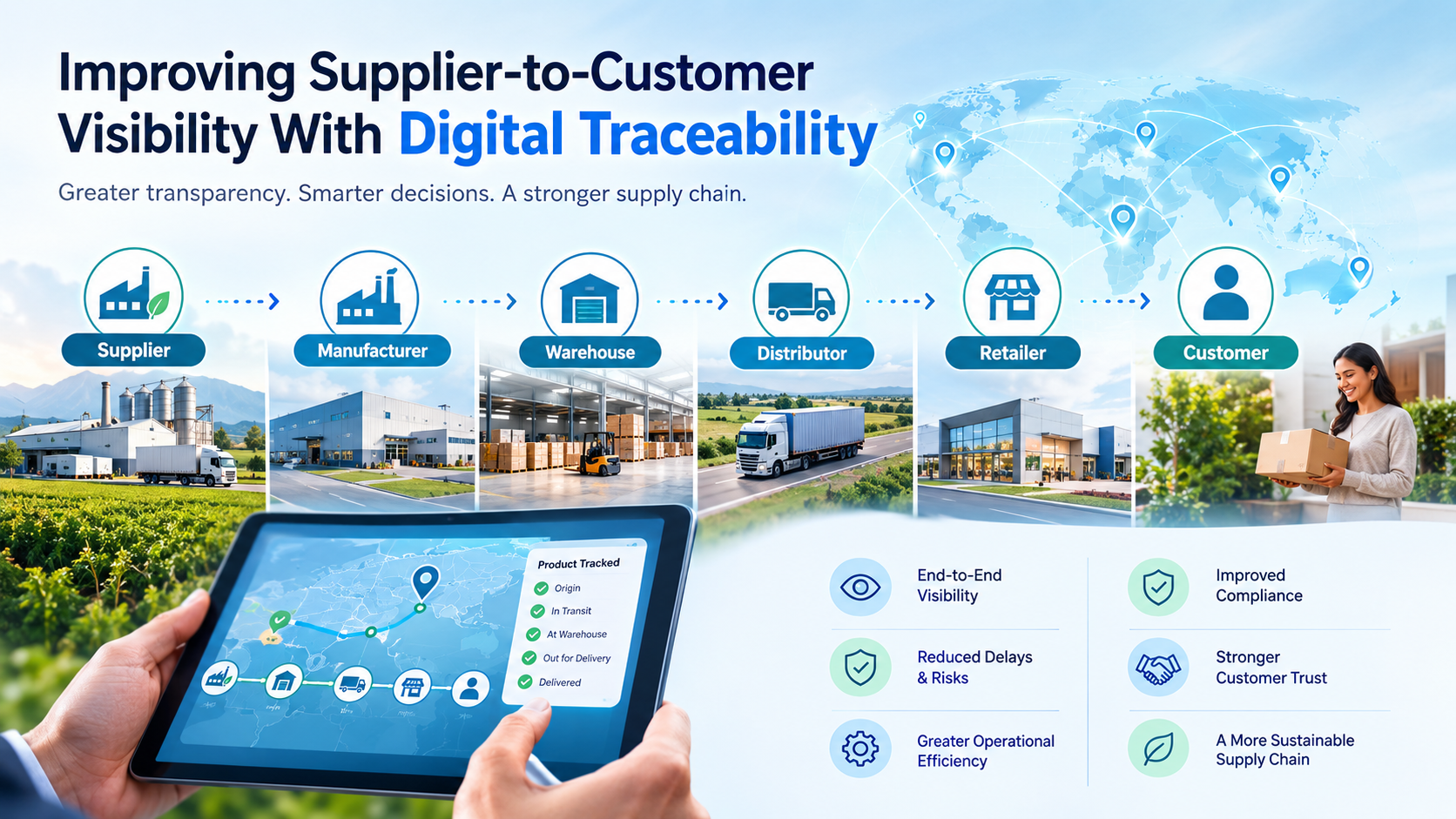
Modern supply chains involve multiple suppliers, manufacturers, warehouses, distributors, retailers, and customers. With so many parties involved, it can become difficult for businesses to know where products are, what is happening to them, and whether they are moving according to plan.
Digital traceability helps solve this problem by providing businesses with better visibility into products, materials, shipments, and processes throughout the supply chain. By collecting and connecting data at different stages, companies can improve transparency, identify problems faster, and provide customers with more reliable information.
What Is Digital Traceability in the Supply Chain?
Digital traceability is the process of using digital technologies to track and record the movement of products, materials, and information throughout the supply chain.
Instead of depending on manual records or disconnected systems, businesses can use technologies such as RFID, barcodes, IoT sensors, cloud platforms, and data analytics to create a connected view of their supply chain.
How Digital Traceability Works
Digital traceability begins when a product or raw material enters the supply chain. A unique identifier, such as a barcode, QR code, or RFID tag, can be assigned to the item.
As the product moves between suppliers, manufacturers, warehouses, distributors, and retailers, important information can be recorded at different points.
This information may include:
- Product identification
- Supplier information
- Manufacturing details
- Location
- Shipment status
- Inventory information
- Temperature or environmental conditions
- Delivery information
The collected information can then be stored and analyzed through digital platforms, giving businesses greater visibility into their supply chain.
Why Supply Chain Traceability Matters
Without proper traceability, businesses may struggle to identify where a product came from, where it is currently located, or what happened during transportation.
Digital traceability creates a record of important supply chain activities. This can help businesses investigate problems, improve operations, support compliance, and provide customers with more accurate product information.
Why Supplier-to-Customer Visibility Is Important
Supplier-to-customer visibility means having a clear understanding of what happens to products and materials from the supplier stage through the final customer.
When information is available across the supply chain, businesses can make decisions based on current and reliable data.
Improving Supply Chain Transparency
A connected supply chain allows businesses to see information from different stages in one place.
For example, a manufacturer can monitor incoming materials from suppliers, production progress, warehouse inventory, and outgoing shipments. This creates greater transparency between different supply chain participants.
Reducing Delays and Operational Risks
Supply chain delays can happen because of transportation problems, inventory shortages, production issues, or communication gaps.
Digital traceability can help businesses identify where a delay has occurred and provide information that supports faster investigation and response.
Building Customer Trust
Customers increasingly want to know where products come from and how they reach them.
Providing accurate product and shipment information can improve transparency and help businesses build stronger relationships with customers.
How Digital Traceability Improves Supplier-to-Customer Visibility
Digital traceability connects information from different points in the supply chain and makes that information easier to access and analyze.
Tracking Products Across the Supply Chain
Businesses can use barcodes, QR codes, RFID tags, and IoT devices to track products as they move through different stages.
This allows organizations to understand product movement from the supplier to manufacturing, warehousing, distribution, and delivery.
Connecting Suppliers, Manufacturers, and Distributors
Supply chain visibility becomes difficult when each business partner uses separate systems.
Digital platforms can help connect information from suppliers, manufacturers, logistics providers, distributors, and other stakeholders. This reduces information gaps and makes collaboration easier.
Providing Real-Time Supply Chain Data
Traditional supply chain records may depend on manual updates, which can result in outdated information.
Connected technologies can automatically capture and update information as products move through the supply chain. This gives businesses a more current view of inventory, shipments, and product status.
Improving Product and Shipment Traceability
Digital traceability creates a digital record of important product and shipment activities.
If an issue occurs, businesses can use this information to identify affected products, locations, suppliers, or shipments more efficiently.
Key Technologies Used for Digital Traceability
Several technologies can work together to create an effective digital traceability system.
RFID and Barcode Tracking
RFID tags and barcodes are commonly used to identify and track products, packages, assets, and inventory.
Barcodes generally require scanning, while RFID technology can allow identification without direct line-of-sight in suitable environments.
IoT Sensors and Connected Devices
IoT devices can collect information about products, vehicles, warehouses, and environmental conditions.
For example, sensors can monitor temperature, humidity, location, or movement during transportation. This information can be useful when products require specific storage or transportation conditions.
Cloud-Based Supply Chain Platforms
Cloud platforms can bring supply chain information together in a centralized environment.
Authorized users can access relevant information from different locations, helping suppliers, manufacturers, logistics providers, and businesses collaborate more effectively.
Data Analytics and Artificial Intelligence
Supply chain data can be analyzed to identify patterns, inefficiencies, and potential problems.
AI and analytics can help businesses understand historical data, detect unusual activity, forecast demand, and support supply chain decision-making.
Blockchain for Supply Chain Transparency
Blockchain can provide a distributed record of selected supply chain transactions.
When appropriately implemented, it can help different stakeholders share and verify certain records while maintaining a history of transactions.
Benefits of Digital Traceability for Businesses
Implementing digital traceability can provide benefits across different areas of supply chain operations.
Better Inventory Visibility
Businesses can gain a clearer understanding of inventory levels and product locations.
Better visibility can help organizations identify stock discrepancies, improve inventory planning, and reduce unnecessary delays.
Faster Identification of Supply Chain Issues
When information is collected across multiple supply chain stages, businesses can investigate problems more efficiently.
For example, if a shipment is delayed, tracking information can help identify its last known location and relevant events.
Improved Regulatory Compliance
Many industries require businesses to maintain records related to products, materials, manufacturing, transportation, and distribution.
Digital traceability can help organizations maintain organized records and retrieve relevant information when required.
Reduced Product Loss and Errors
Automated identification and tracking can reduce dependence on manual data entry.
More accurate product information can help reduce issues such as misplaced inventory, incorrect shipments, and tracking errors.
Better Customer Experience
Customers can benefit from accurate delivery information, product details, and greater transparency.
Businesses can also respond to customer questions more quickly when relevant supply chain information is readily available.
How to Implement Digital Traceability
A successful digital traceability strategy requires more than simply adding a tracking technology. Businesses need to consider their processes, systems, data, and supply chain partners.
Identify Supply Chain Visibility Gaps
Start by identifying where information is currently missing or difficult to access.
Businesses should examine supplier management, production, warehousing, transportation, distribution, and customer delivery processes.
Select the Right Tracking Technologies
The appropriate technology depends on the type of products, operating environment, budget, and tracking requirements.
Businesses may use barcodes, RFID, QR codes, IoT sensors, GPS, cloud platforms, or a combination of technologies.
Integrate Supplier and Customer Data
Traceability becomes more useful when information from different systems can work together.
Integration can connect supplier information with manufacturing, warehouse, logistics, and customer-facing systems.
Monitor and Analyze Supply Chain Data
Collecting data is only the first step. Businesses should regularly analyze the information to identify delays, inventory issues, process inefficiencies, and other supply chain problems.
Continuously Improve Traceability Processes
Supply chains change over time. Businesses should regularly review their traceability systems and update processes as new technologies, suppliers, products, and customer requirements emerge.
Challenges of Implementing Digital Traceability
Although digital traceability offers significant operational benefits, implementation can involve several challenges.
Data Integration Challenges
Different suppliers and business partners may use different software platforms and data formats.
Connecting these systems can require integration work and standardized data processes.
Technology and Implementation Costs
Businesses may need to invest in hardware, software, sensors, integration, training, and maintenance.
The implementation strategy should therefore be aligned with the organization’s operational requirements and available resources.
Supplier Adoption and Collaboration
A supply chain involves multiple organizations. If suppliers or logistics partners do not share the required information, complete visibility can be difficult to achieve.
Clear processes and communication between stakeholders are important for successful implementation.
Data Security and Privacy
Digital traceability systems handle large amounts of business and operational information.
Organizations should use appropriate access controls, security practices, and data management policies to protect sensitive information.
Future of Digital Traceability in Supply Chains
Digital traceability is expected to become increasingly connected as businesses adopt technologies such as AI, IoT, cloud computing, and advanced analytics.
AI-Powered Supply Chain Visibility
AI can help organizations analyze large amounts of supply chain data and identify patterns that may be difficult to detect manually.
Businesses can use these insights to support planning, risk management, and operational decision-making.
Real-Time IoT Tracking
IoT devices can provide continuous information about products, vehicles, assets, and environmental conditions.
As connected devices become more widely adopted, businesses can develop more detailed views of supply chain activities.
Predictive Supply Chain Analytics
Instead of only understanding what has already happened, businesses can use historical and current data to identify potential future issues.
Predictive analytics can support areas such as demand planning, inventory management, transportation, and maintenance.
Increasing Demand for End-to-End Traceability
Customers, regulators, and business partners are placing greater importance on transparency and product information.
This is increasing the need for businesses to develop traceability systems that connect different stages of the supply chain.
Conclusion
Improving supplier-to-customer visibility requires businesses to connect information across the entire supply chain. Digital traceability provides a practical way to track products, capture important data, and improve transparency from suppliers to final customers.
By combining technologies such as RFID, barcodes, IoT, cloud platforms, and analytics, businesses can develop a more connected view of their operations. This can support better inventory management, faster issue identification, improved transparency, and a better customer experience.
As supply chains become more complex, digital traceability can play an important role in helping businesses create more connected, transparent, and data-driven supply chain operations.
Frequently Asked Questions About Digital Traceability
Q1. What is digital traceability?
Digital traceability is the use of digital technologies to track and record products, materials, and processes as they move through different stages of the supply chain.
Q2. How does digital traceability improve supply chain visibility?
It connects information from suppliers, manufacturers, warehouses, logistics providers, distributors, and other supply chain stages, giving businesses a more complete view of product movement and status.
Q3. What technologies are used for supply chain traceability?
Common technologies include RFID, barcodes, QR codes, IoT sensors, GPS, cloud platforms, data analytics, and artificial intelligence.
Q4. What are the benefits of digital traceability?
Digital traceability can improve supply chain transparency, inventory visibility, product tracking, issue identification, compliance management, and customer communication.
Q5. How can businesses implement digital traceability?
Businesses can begin by identifying visibility gaps, selecting appropriate tracking technologies, integrating supply chain systems, establishing data standards, and continuously monitoring performance.